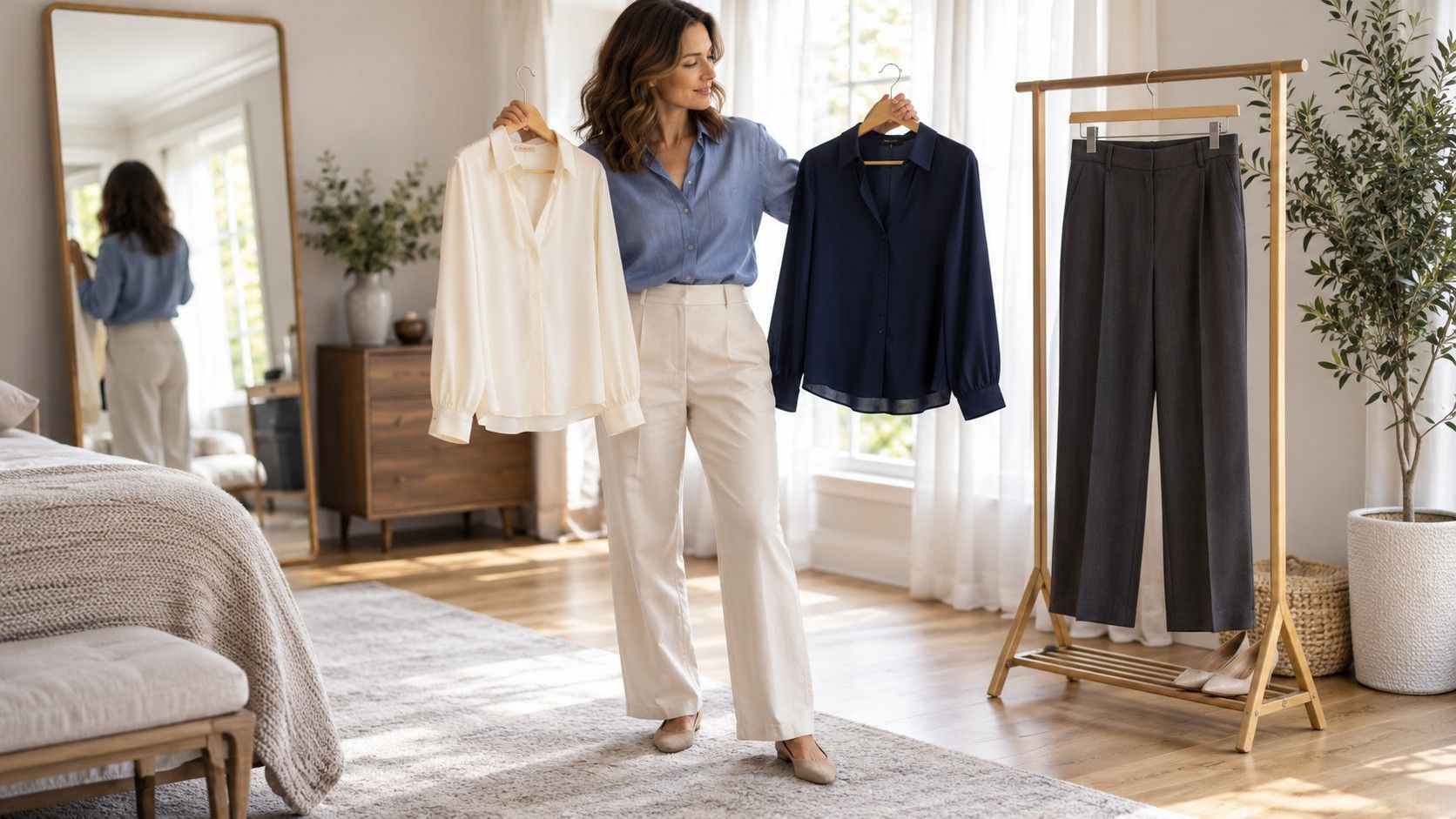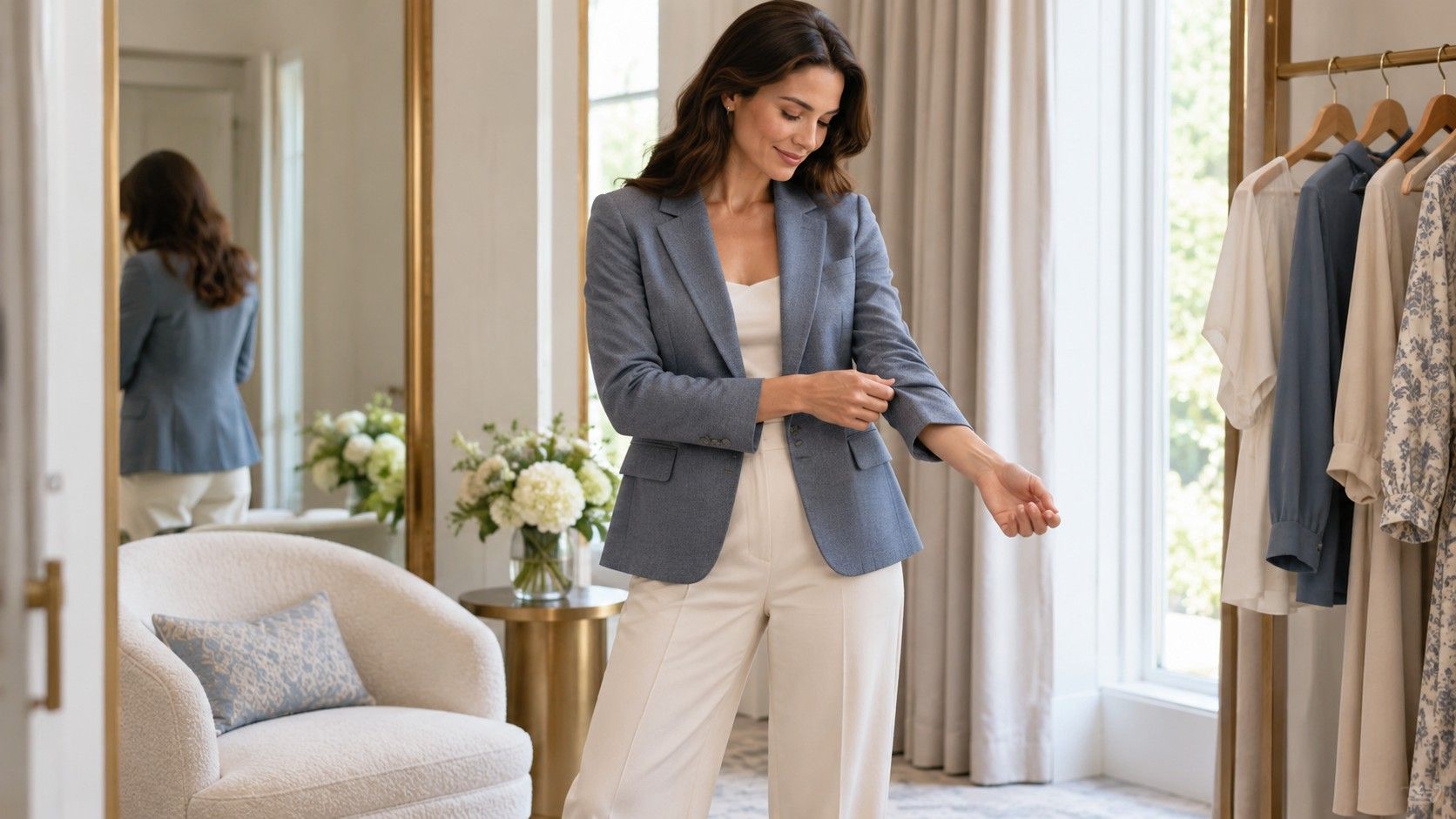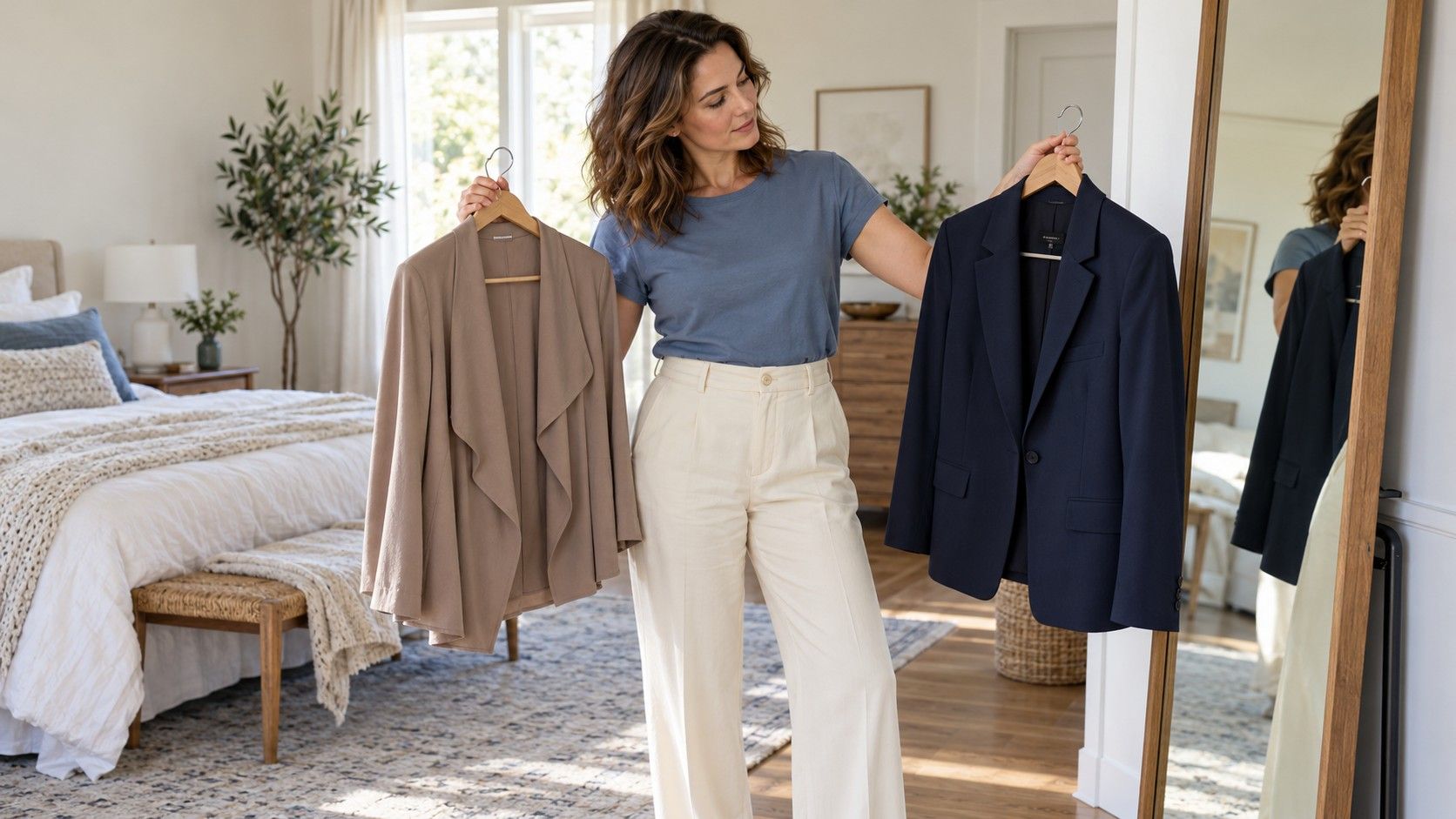
One style suggestion asks for relaxed shapes, another points toward clear contrast, and a third says your clothes should feel romantic. Getting dressed can begin to resemble a negotiation between people who have never seen your wardrobe. You do not need another label to settle it. Start with the outfit you need today, identify what each suggestion is trying to change, and compare the changes one at a time. Comfort, context and your own taste can provide a decision long before every framework agrees.
Identify which advice is actually conflicting
Conflicting style systems often describe different parts of an outfit. Seasonal color analysis generally concerns color relationships; a silhouette framework may focus on line and shape; an aesthetic label can suggest a mood or cultural reference. A recommendation for a muted color and another for a structured jacket can both be explored in the same garment. The apparent disagreement may come from treating every piece of advice as a complete wardrobe instruction.
Translate each claim into something visible. Relaxed might mean a looser shoulder, a softer fabric or simply a less formal styling choice. High contrast could mean black against white, a bright accessory against a dark base or a difference between your natural coloring and your clothing. Ask which version is intended before deciding that the advice cannot coexist.
Write the two competing suggestions beside the actual decision. For example, you want a jacket for a presentation and are choosing between a draped version and one with a firmer shoulder. Color is not the current conflict if both jackets are navy. Similarly, choosing between two shirt colors does not require settling a body category.
Keep the status of the frameworks clear. These are interpretive ways of discussing clothes, not scientific diagnoses or universal instructions. Advice from different writers can also vary within a single system. If a recommendation cannot be translated into a useful comparison, set it aside while you make the immediate clothing decision.
Give fit first say on the garment
Before judging whether a jacket expresses the right style identity, check whether you can move in it. Reach forward, sit down and fasten it as intended. Look for pulling at the closure, sleeves that restrict your arms or a collar that lifts away awkwardly. These are garment observations. You do not need to infer anything about your body type to say that a particular cut does not feel comfortable.
Fit also depends on the task. A dress for a seated meal needs a comfortable waist while sitting; a work shirt must allow the movements your work involves. A long hem that looks appealing in a mirror may catch under a chair or drag on a pavement. Keep those constraints in the decision even if a style illustration suggests otherwise. A useful outfit has to survive the setting where it will be worn.
Compare a nearby size or another cut if the first option fails. More room at the chest may change the shoulder or sleeve, so check the whole garment again rather than stopping once a button closes. Stretch can provide ease, but it does not guarantee comfort or stable fit. Examine where the fabric settles after movement. Constant tugging is a good reason to try something else, however promising the color and shape appear.
Once two options fit well enough, style preferences become easier to judge. You are comparing choices you can actually wear instead of one comfortable piece against a theoretically ideal but restrictive one. This order also makes alterations more focused: a simple hem change may complete an outfit, whereas a major reconstruction can cost more than finding a better starting garment. Ask about feasibility and price before depending on a repair.
Separate color from mood and silhouette
A color palette does not determine fabric texture, formality or personality. A soft rose can appear in a plain cotton shirt, a gathered satin blouse or a tailored wool jacket. Those pieces share a color family but create different impressions. If a palette you enjoy seems too delicate for your preferred style, try it in a more direct cut or a matte fabric before assuming the color itself is the problem.
The same principle works in reverse. A fluid silhouette can use a saturated blue; a sharply shaped jacket can be a muted brown. You may choose a quiet version of a dramatic shape or a vivid version of a simple one. Lay two or three options beside the same base outfit and look at the whole combination. You are free to adjust how much contrast or texture appears without changing every aspect of the look.
Placement matters too. A color you dislike near your face might be enjoyable in a bag or skirt. A strong print may feel right as a small scarf and overwhelming as a coat. This does not prove a seasonal category; it shows a preference in that particular arrangement. Check the actual shades in consistent light, because warm indoor lighting and phone processing can change how a color appears in a photograph.
Use mood words with concrete clothing choices. If you want an outfit to feel approachable, perhaps an open collar or a familiar knit helps. If you want it to feel formal, a polished shoe and a cleanly pressed trouser may contribute. These are possibilities to compare, not fixed meanings that every viewer will read the same way. Your workplace, social setting and personal associations all affect the result.
Run a small comparison with existing clothes
Choose one real occasion and a base outfit you already wear. Keep the trousers or skirt, shoes and lighting constant while comparing two tops. This makes it easier to see the change you are considering. If you swap the shoes, pose, hairstyle and jacket at the same time, you may prefer one photograph without knowing which detail made the difference.
Pick one variable for the first round: neckline, fabric stiffness, color depth or hem length. Wear each version normally, then sit and move. Take a front and side photograph at the same distance if pictures help, but also note what the image cannot show, such as a scratchy seam or a waistband that slips.
Use a few plain questions instead of a score that pretends to be objective. Can you do the planned activity comfortably? Do you like the visible shape? Does it work with the coat and bag you need? Would you choose it again next week? A combination that receives mixed answers may need a small change, such as a different base layer.
If you ask someone else for an opinion, make the question specific. Asking which jacket looks more formal for a presentation is easier to answer than asking which style type you are. Treat the response as another perspective and keep your own comfort in view. Then wear the preferred outfit in an ordinary setting if practical. A day of use can reveal that the appealing sleeve catches on everything or that the quieter option is surprisingly easy to repeat.
Keep a personal rule only while it helps
Turn useful observations into narrow working rules. You might note that a medium-weight knit sits well under your coat, that you prefer an open neckline with one particular necklace, or that dark green combines with several pieces you own. These statements describe successful choices. They are easier to apply than a sweeping ban on all high necklines or all bright colors, especially when fabric and cut change the result.
Keep a short record using photographs or a few notes. Include the occasion and the practical detail that mattered, not just whether you liked the final picture. A pair of shoes may work for a short dinner and be unsuitable for a day involving much walking. A favorite silhouette can remain useful while the material changes with weather. Context keeps a helpful observation from becoming an unnecessary restriction.
Revisit a rule when it stops earning its place. Your work, climate, comfort needs and taste can change; clothing options change too. Trying a new version does not mean an earlier choice was mistaken. If you previously avoided wide trousers because of one heavy pair, compare a lighter fabric with a different hem before rejecting the whole category. Use something borrowed or already owned where possible, so the experiment need not become another shopping project.
You can also leave a question unresolved. If two systems continue to suggest different directions and both produce outfits you like, keep both possibilities. Dress more softly one day and more sharply another, with no obligation to unify them under a new name. A useful framework helps you notice and choose. When it adds more doubt than clarity, the next step can simply be to wear the comfortable outfit that suits the day.