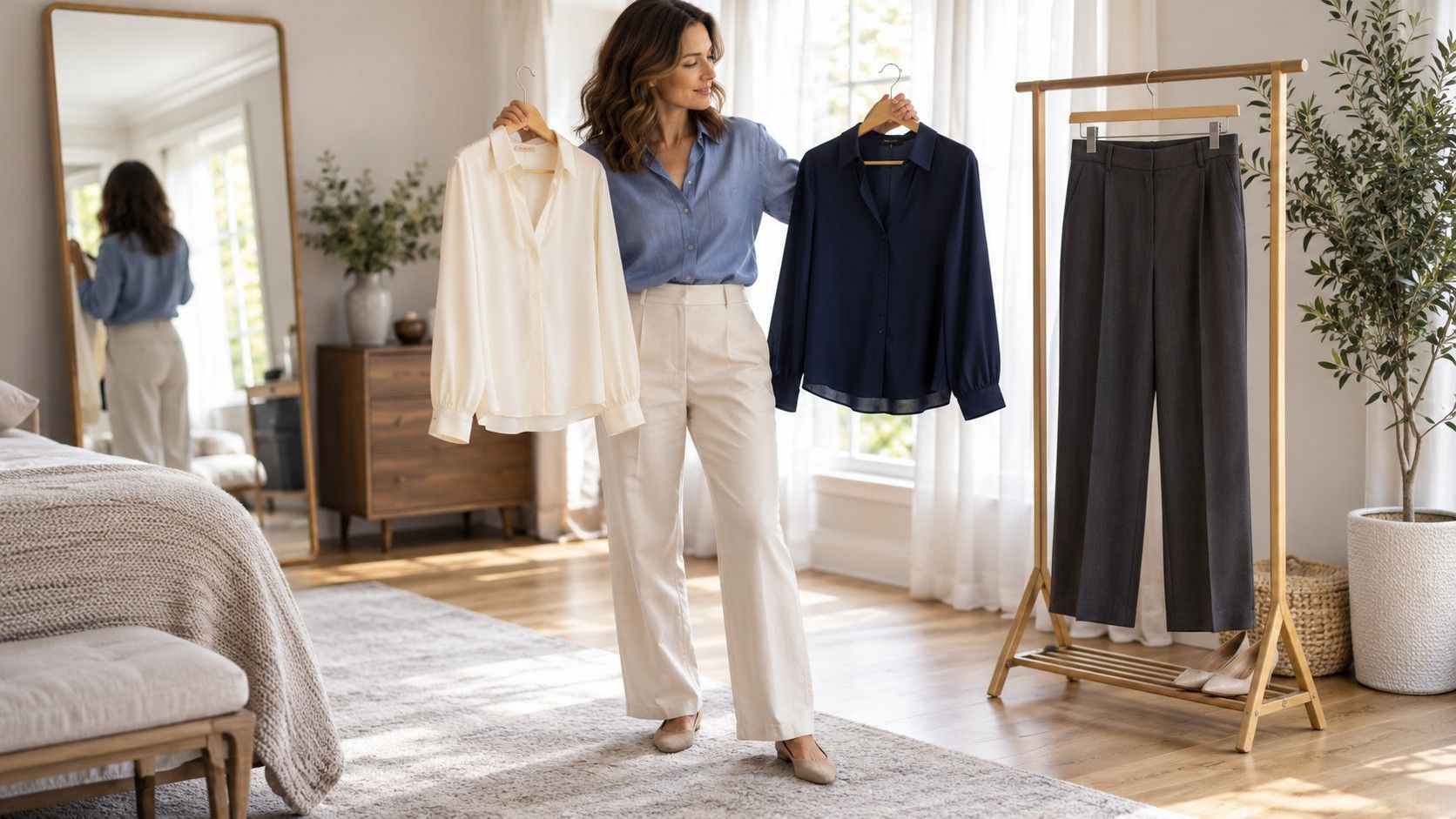
The changing-room mirror can make a simple purchase feel like a test you have not revised for. A style guide recommends drape, the shop calls a trouser “tailored,” and the size you normally wear will not fasten comfortably. Bring the decision back to the garment. A useful body type shopping checklist starts with what you need the clothes to do, then checks fit, movement and combinations. Style labels can suggest something to try; they do not get the final vote.
Bring the outfit context into the fitting room
Write down the missing item before browsing. “Trousers for three office days a week, worn with flat shoes” is a workable shopping goal. “Something for my body type” leaves too much open and makes almost any persuasive display seem relevant. Include the season, the setting, the amount of walking and any coverage or dress requirements. Those details rule out unsuitable purchases faster than a silhouette chart.
Wear or bring the pieces that will meet the new item most often. A blouse intended for a particular jacket should be tried under that jacket if practical. Trouser length depends on the shoes, so bring the actual pair or one with a similar sole and heel height. Trying everything with bare feet can hide a dragging hem and make a useful length appear wrong.
Underlayers matter too. A bra, camisole or slip can change the way a neckline sits and whether fabric feels transparent. Use the sort of underlayer you expect to wear with the garment. If the outfit would need an additional purchase, add that to the decision rather than assuming an unspecified layer will fix everything. A low-priced dress may become less convenient once it needs a special slip and different underwear.
Check seams and movement before the label
Put the garment on fully, fasten it as intended and let it settle before judging. Check for a caught lining, twisted strap or folded pocket. Look at the neckline and side seams, then turn sideways. A designed dropped shoulder is different from a set-in sleeve that feels misplaced, so avoid judging every garment by one seam-position rule. Ask whether the construction hangs comfortably and produces the outline you want.
Look for tension where it matters. Buttons should not need to fight their buttonholes while you breathe normally. A zip that closes only while you hold yourself rigid is unlikely to become more comfortable at lunch. Horizontal pulling, a collar that presses and a waistband that rolls deserve attention, but their cause can vary. Try another size or cut rather than treating the fabric's behavior as a verdict about your proportions.
Use ordinary movements. Reach forward as though typing, raise an arm to a high shelf and take several normal steps. Sit on the changing-room bench if one is available. A fitted skirt may allow standing comfortably while restricting a longer stride; a blouse can sit neatly until your hands reach a keyboard. Check the activities the garment must handle instead of inventing an athletic test unrelated to your day.
Watch what happens after movement. Does the shirt fall back into place, or remain caught above the waistband? Does a wrap opening need constant attention? Does the hem catch under the shoe when you turn? Some adjustment is normal, but decide how much you will accept. An outfit for an occasional dinner and a shirt for an active workday can reasonably have different limits.
Feel the inside before taking the item off. A scratchy seam, stiff label or lining that catches at the elbow may be more noticeable after several hours. Check that pockets lie comfortably when used and that a bag strap does not pull the neckline out of position. The mirror shows the outer arrangement; these small contact points often decide whether the garment leaves the wardrobe.
Compare sizes without treating them as scores
Bring adjacent sizes into the room when they are available and you are uncertain. The number is a way to locate stock, not a mark for getting dressed correctly. Even within one shop, a stretch knit and a woven shirt may require different sizes. Choose the version that allows your body to move and gives the drape you prefer, without trying to make the label agree with an earlier purchase.
Compare the same actions in each size. In the smaller one, check the buttons, upper back and seated waistband. In the larger one, check whether excess fabric gathers, the neckline slips or the waistband moves down when you walk. Bigger is not automatically the solution to every fit issue. A different cut may provide room where you need it without introducing unwanted fabric elsewhere.
| What happens | Useful comparison | Reason to pause |
|---|---|---|
| Shirt pulls across the back | Next size and a cut with more upper-back room | Larger version slips at the neckline |
| Trousers fit standing but press when seated | Another size, rise or waistband construction | Comfort depends on leaving the fastening open |
| Dress fits the torso but restricts walking | Another skirt shape or a suitable movement opening | Every normal stride requires holding the skirt |
| Shoulders and sleeves feel right, hem is too long | Shorter length or an alteration assessment | Shortening would remove important design details |
Take alteration possibilities seriously but keep them specific. A plain hem may be straightforward to shorten; a garment with a border, complex lining or placed pockets may be less simple. Ask an alterations professional about feasibility and price before relying on the change. “It can probably be fixed” is weak grounds for buying something you cannot comfortably wear as it stands.
If no size works, leave the garment undecided or put it back. You may like the design and still find that its pattern is inconvenient for you. That is a limitation of this item, not evidence that you need to change your body or abandon an entire clothing category. Save a note about the successful details and look for them in another construction.
Separate a color problem from a cut problem
A color you dislike can distract from good fit, while a favorite shade can make a pulling seam easier to overlook. Try to name both responses. “Like the blue, need more sleeve room” tells you what to seek next. “This is wrong for my type” combines two questions and removes the useful detail. Color and garment construction deserve separate decisions.
When possible, compare the same style in two colors. Keep the size, tuck and underlayers unchanged. Look at the fabric near your face and beside the pieces you already wear. Shop lighting may change your impression of a shade, and phone cameras can adjust color and brightness. If color is the only uncertainty, ask whether there is a better-lit area and check the return conditions before purchasing.
For cut, return to one shade and compare the practical detail. A shallow V and a high round neckline may feel different under the same jacket. A curved shirt hem may sit more easily over your trousers than a long straight one. These observations do not require an agreed seasonal color label or body-type classification. They help you recognize a garment you can use.
Consider contrast across the whole outfit. A very light top with dark trousers makes a different visual arrangement from two pieces close in depth. Neither is inherently correct. Compare them with the shoes and outer layer you intend to wear, and decide which relationship you enjoy for the occasion. A striking combination for an evening event may be more contrast than you want in everyday work clothes.
Leave with a decision you can explain
Before paying, put the garment's job into one sentence. “This blouse is comfortable under my navy jacket and works with two trousers I own.” If the explanation depends entirely on an online label, try again with the actual clothes. You should be able to say what fits, what combines and when you will wear it. A style framework can support that decision without taking it over.
Include care and upkeep in the practical test. Read the care label and consider whether the recommended routine fits your habits. Check whether you accept the fabric's creasing, whether fastenings are manageable and whether the item needs an underlayer you enjoy wearing. A garment that demands more maintenance than you will give it may spend most of its life waiting for a suitable day.
For any unresolved issue, distinguish a small uncertainty from a known problem. “Need to see the color beside my coat” might be answerable at home under an appropriate return policy. “Waistband already uncomfortable after two minutes” is information you have now. Check the actual return deadline and conditions, retain the necessary tags and keep the garment unworn while deciding. Do not assume every purchase can be returned.