A soft blue shirt can be a color you enjoy and still have sleeves that pull. A well-cut jacket can feel right across the shoulders while its shade seems difficult to combine with the rest of your wardrobe. These are separate observations, even when an online style result bundles them into one label. Looking at complexion and body types can supply ideas, but choosing a useful outfit means testing color, cut and comfort on their own terms.
Separate color observations from garment fit
Start with the problem you can describe most clearly. “The collar feels tight” concerns fit. “I prefer the blue beside my face” concerns a color relationship and personal taste. “This outfit feels too formal for Saturday” concerns the setting. When all three become “this does not suit my type,” the useful information disappears. Keep the description close to what you can actually see or feel.
Complexion is not a garment measurement. A color observation cannot tell you which trouser rise will stay comfortable at a desk, and shoulder room cannot decide whether you enjoy a bright scarf. Likewise, a body-shape label does not establish a seasonal palette. You can explore both kinds of styling ideas, but there is no need for them to resolve into a single category before you get dressed.
Choose a familiar outfit and make two columns in your notes: color and clothing behavior. Under color, record the relationship you notice, such as “strong contrast at the neckline” or “easy to wear with navy.” Under clothing behavior, note whether seams twist, buttons pull or the hem catches on a chair. Avoid replacing those observations with judgments about your body.
Keep the intended day in view. A cream top that needs careful handling may be lovely for a short dinner and impractical for a long commute. A loose dark shirt may be useful for work even when a lighter color feels more appealing in daylight. Practical choices do not invalidate your preferences. They explain why the same person can reasonably keep different solutions for different occasions.
Check the same top in two colors
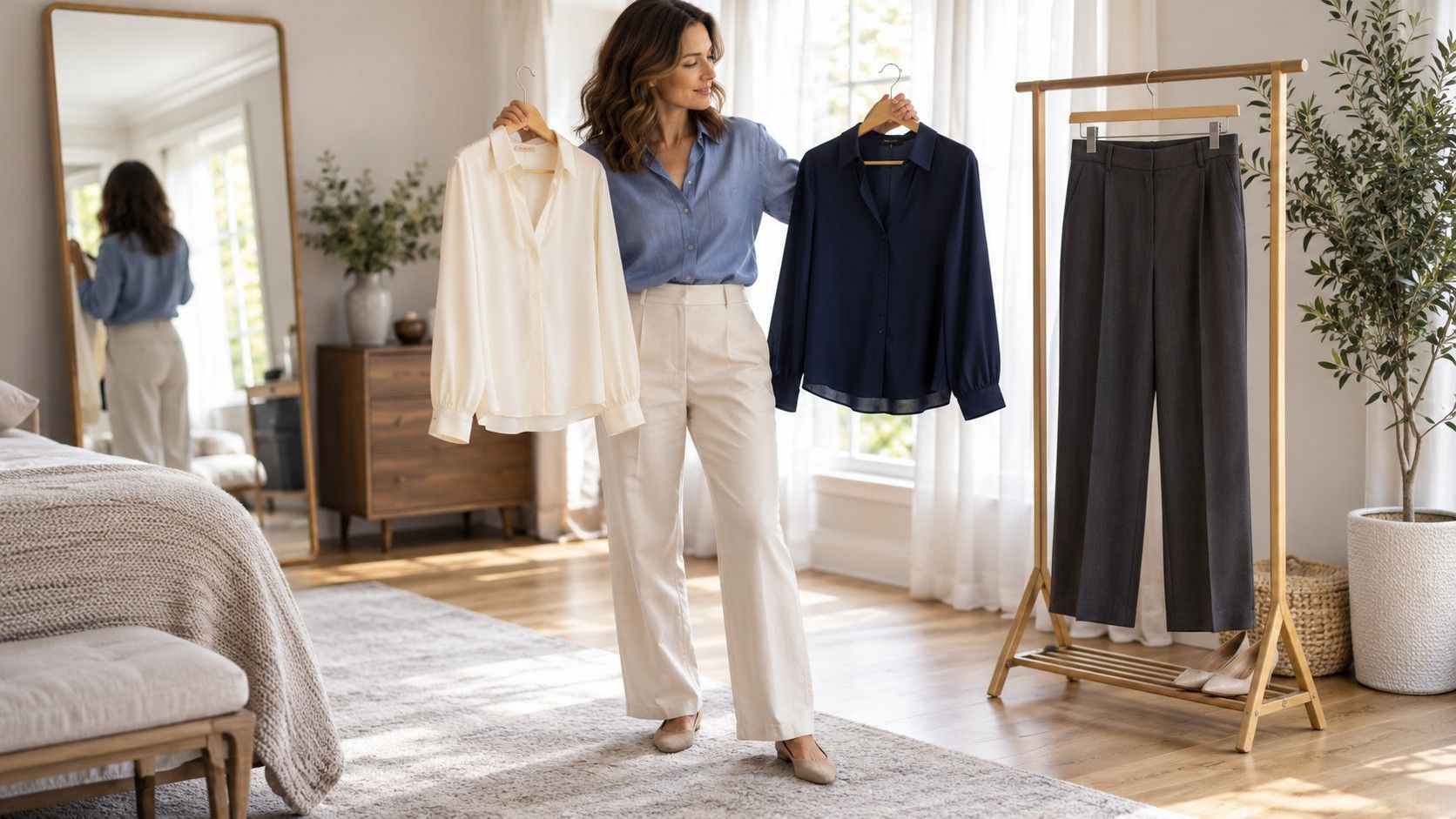
The cleanest comparison uses the same top in two shades, with similar fabric and fit. If you already own that pair, wear each with the same trousers and shoes. Keep the neckline, sleeve arrangement and tuck unchanged. You are then closer to comparing color itself, rather than accidentally preferring the roomier sleeve or shorter hem of one garment.
You do not need to purchase duplicates for the exercise. Try two tops with similar necklines and fabric weight, while noting any difference. Another option is to hold two existing scarves or fabric pieces near the same neckline. That can help you compare shades, but the extra volume and texture may affect your impression. Treat it as a useful approximation rather than a perfectly controlled test.
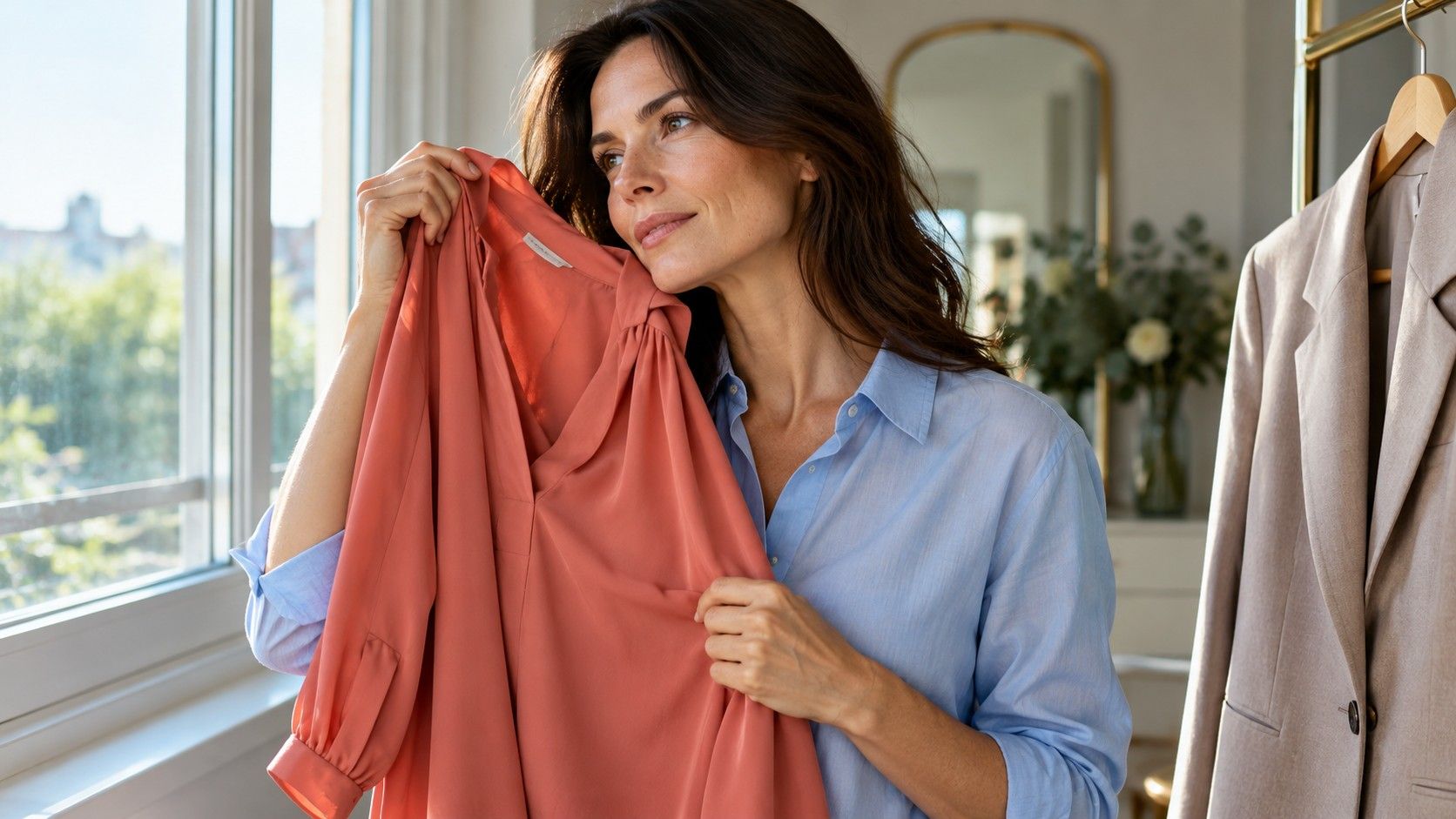
Stand in steady, indirect daylight, away from a colored curtain or a strongly painted wall. Check the real fabric in a mirror before relying on a phone photo. Automatic exposure and color processing can change the image between frames, especially when one garment is much darker. A photograph can preserve the combination you tried without becoming the final judge of a subtle color difference.
Ask concrete questions. Do you enjoy the contrast near your face? Does the shade work with the jacket you actually need? Is the color easy to combine with two or three existing bottoms? These questions produce wardrobe information. Trying to decide whether a top makes you objectively look “healthier” or “younger” is less useful, because lighting, makeup and expectations can change that impression.
Watch what changing the cut actually does
Once you have considered color, return to one shade and change a single clothing detail. Try a shirt loose and then partially tucked, or compare two trouser shapes with the same top. Keep the shoes consistent; a change in heel height can alter both the hem and how you stand. The point is to see which adjustment creates an outline you enjoy while preserving comfort.
Inspect the garment before drawing conclusions about the silhouette. A skirt that rides up may be the wrong size or cut for the way you move. A shirt with a stiff fabric may stand away from the waist where a fluid one would fall back. Those are construction and fit questions. They do not establish a permanent rule that you can never wear that garment category.
| Observation | Question to test | Small next step |
|---|---|---|
| Like the color, dislike the collar | Is the opening uncomfortable or visually too closed? | Try the same color with another neckline |
| Enjoy the shape, struggle to combine the shade | Does it work with the pieces already used most? | Compare another color in a similar cut |
| Outfit looks good standing, feels tight seated | Is the waistband or fabric limiting movement? | Try a different size or construction |
| Loose hem feels untidy with these trousers | Would a shorter hem or a light tuck help? | Test both before altering the shirt |
Use movement to judge fabric drape. Reach forward, sit and stand, then let the clothes settle without arranging them. A fabric that returns to a comfortable position may suit a busy day better than one that needs attention after every movement. For an occasional outfit, you may accept more maintenance. That decision belongs to your routine, rather than a style-system chart.
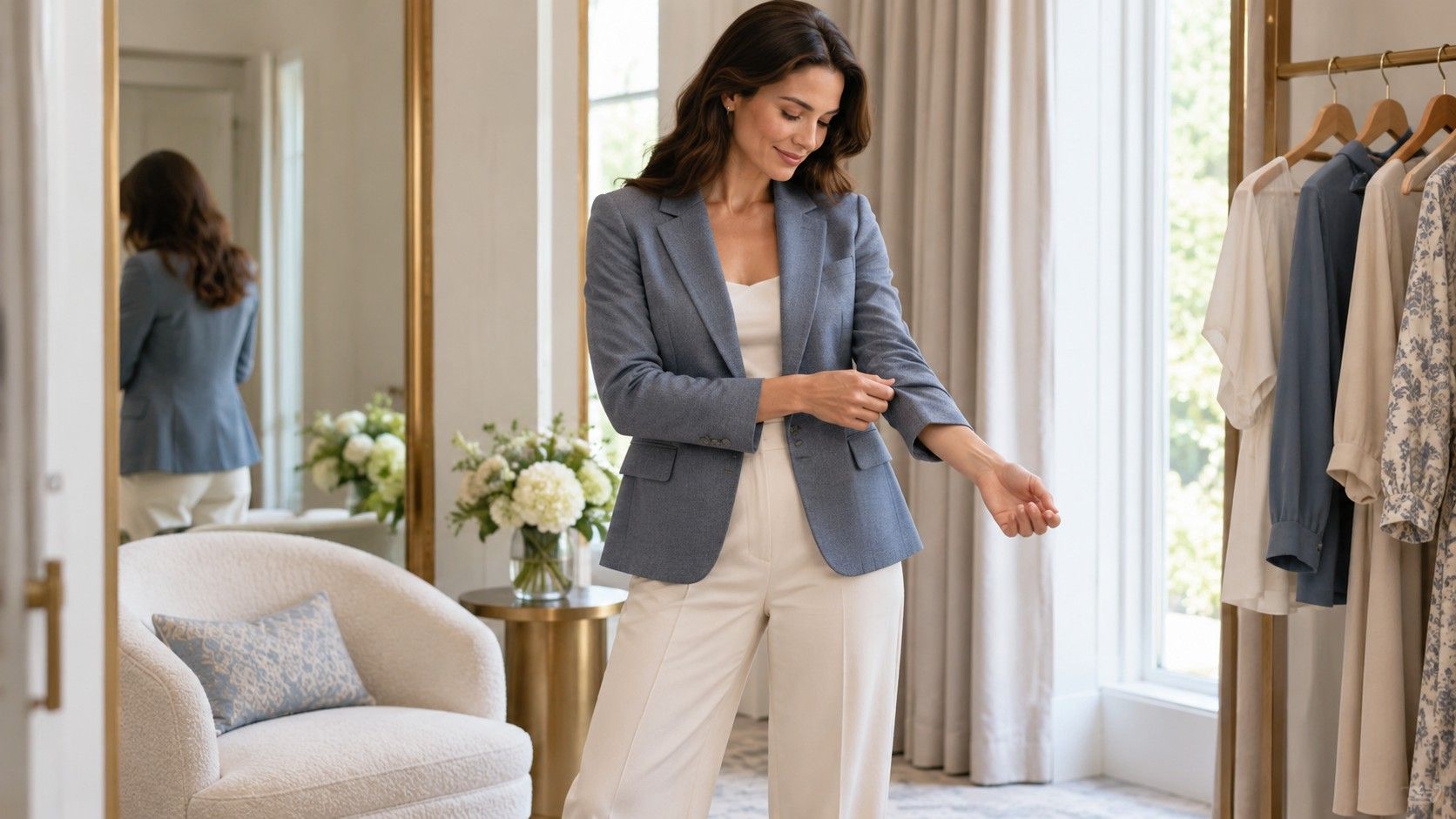
Notice details that can be changed without replacing the garment. An adjusted sleeve cuff, a small hem alteration or a different fastening position may solve a specific problem. If you are considering an alteration, use removable pins carefully while standing to assess the idea, then consult an alterations professional about feasibility. Do not judge seated comfort while sharp pins are positioned against your skin.
Treat seasonal labels as working ideas
Seasonal color labels offer a vocabulary for grouping shades by qualities such as temperature, depth and clarity. Different methods may organize those qualities differently, and a home comparison does not require certainty about a named season. You can use “slightly softer blue” or “less contrast between the top and jacket” as practical directions without deciding which palette owns them.
If a seasonal suggestion interests you, choose one accessible example from your wardrobe. Compare a muted and a brighter top in similar colors, or a lighter and a darker version near the face. Keep the question narrow enough to answer. A whole rack of colors is difficult to compare, especially when every piece has a different neckline, texture and shape.
Hair color, makeup and accessories are part of the outfit you are evaluating. You can compare with your usual makeup if that reflects everyday dressing, or without it if you want a different starting point. Keep the choice consistent during the session and record it. Neither approach gives a verdict on your natural appearance; it simply makes the comparison easier to interpret.
Do not discard a favorite color because it falls outside a suggested palette. Try its placement. You may prefer it in trousers, a bag or a print rather than across a large area at the neckline. You may also love it exactly where it is. A styling framework should give you more ways to work with clothes, while leaving room for taste, memories and the mood you want an outfit to express.
Build a useful personal note instead of a verdict
Write a note that another shopping trip could use. “Prefer medium-depth blue near the face; need room across the upper back; like a curved hem with straight trousers” contains three testable details. “My complexion body type is difficult” contains none. If you use a category name as a reference, put the actual garment observations beside it so the label cannot erase them.
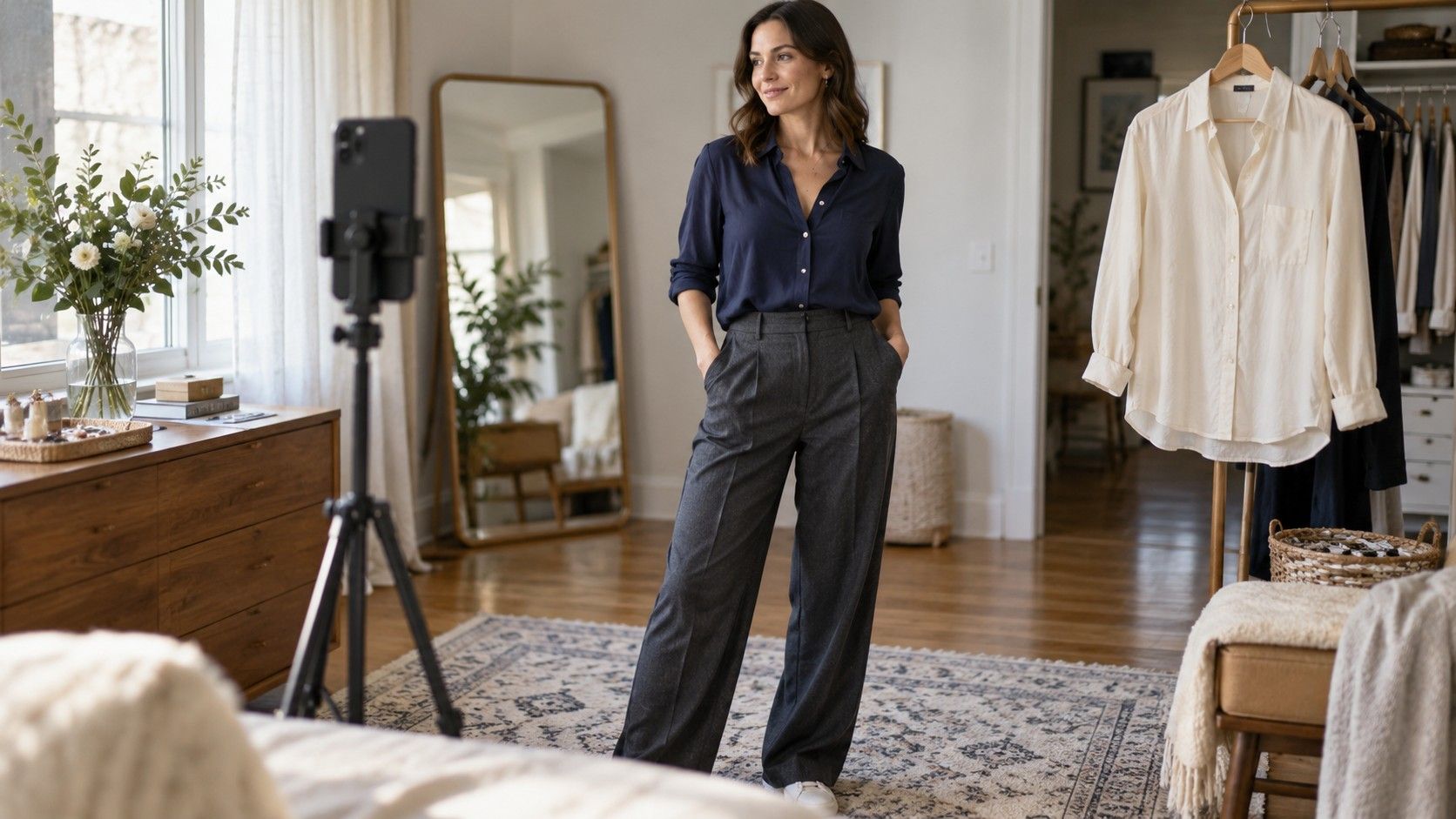
Add a photograph of one outfit you would happily repeat, taken in ordinary light. List the items and the details that made the combination work: comfortable waistband, neckline opening, sleeve room and color relationship. If you take measurements from a favorite garment laid flat, record the method too. Fabric stretch and construction still matter, so measurements are a comparison aid rather than a promise of fit.
Include a short uncertainty note. Perhaps you have only tried a pale top under warm lighting, or the trousers were worn with shoes you do not normally use. That makes it easier to revisit one unresolved question without restarting the whole process. There is no deadline for arriving at a complete style identity, and a useful wardrobe does not depend on one.
Bring the note into the changing room and try the actual tasks the clothes must handle. Sit, reach, walk and add your usual outer layer. Check the color with something you already wear often. Buy when the garment answers a real need and passes those checks, or leave it when it demands too many compromises. That is a decision you can trust without asking a single label to explain your entire appearance.