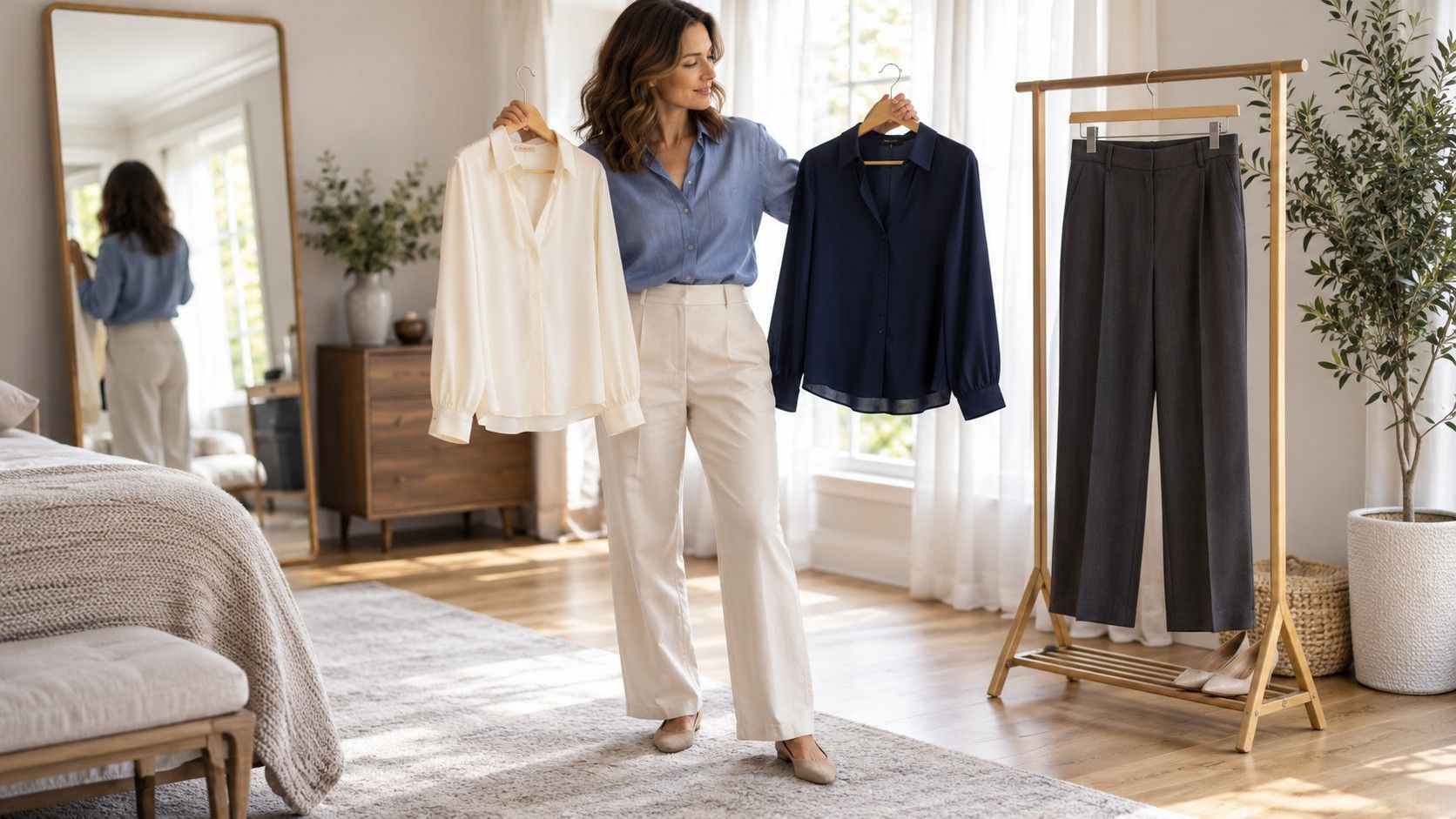
A small wardrobe is useful when it gives you enough comfortable combinations for your actual week. It becomes less useful when every piece follows a style label but nothing suits a wet commute, a warm office or laundry day. Start with clothes that already work, then give new advice a limited trial. You can build a coherent set without settling every question about your type, buying a complete matching collection or discarding pieces that still earn their place.
Choose a real week instead of an imaginary lifestyle
Look at the coming week before opening a shopping page. Count the occasions you actually dress for: office days, errands, time at home, a meal out and any exercise or specialist activity. Include the weather and how you travel. A wardrobe assembled around formal dinners will not solve a week spent walking to work. Your calendar provides a better starting point than an aspirational image full of clothes you rarely need.
Choose a manageable scope, such as everyday clothes for the next few weeks in one season. There is no compulsory number of garments. Underwear, work uniforms, sportswear or occasional formal pieces may need separate consideration because they perform different jobs. Decide what you are trying to simplify before counting. A small collection that excludes half your daily needs is only small on paper.
Consider laundry as part of the plan. A few tops may be enough if you wash frequently and they dry quickly; the same number may fail when washing happens weekly or several pieces need special care. Include spare options for spills, weather changes and a garment waiting to be repaired. You are aiming for an easier routine, so avoid a plan that depends on every item being clean and available at once.
If you are exploring a style system capsule wardrobe, use the framework to suggest experiments rather than dictate the entire inventory. Silhouette and color categories are interpretive tools, not scientific assessments or guarantees of a successful purchase. Your week supplies the requirements: comfortable seated clothing, an appropriate level of formality, enough warmth and shoes for the route you actually take.
Find the pieces that already work together
Take out the garments you reach for repeatedly, even if they do not seem to match your intended style label. Ask what makes them useful. A trouser might have a comfortable waistband and suit two pairs of shoes; a cardigan may fit beneath your coat without pulling at the sleeves. Those details are valuable evidence from your own wardrobe. Do not replace a useful piece simply because it looks less exciting laid flat.
Build two or three complete outfits around those anchors. Include underwear requirements, footwear and an outer layer, because a top and bottom alone may hide a missing job. Try the pieces on rather than relying entirely on a bed layout. A shirt that looks compatible with a skirt can bunch at the waistband, and a jacket may not accommodate the sweater sleeves. Movement helps reveal those problems before a rushed morning does.
Look for repeated colors and shapes among the successful combinations. Perhaps dark blue bottoms connect several tops, or you prefer a shorter layer over fuller trousers. You can choose those relationships as the beginning of a palette and silhouette plan. A neutral need not be black, and every top need not match every bottom. A few dependable combinations are more useful than a theoretical grid of pairings you dislike wearing.
Place uncertain items aside for later review rather than forcing an immediate disposal decision. Some may work with a different shoe or a small repair; others may simply belong to a different season or occasion. Keeping them separate makes the current set easier to see without requiring an irreversible clear-out. Record the exact problem with an item so that trying it again has a purpose.
Give each style idea one practical trial
Choose one suggestion that could solve a problem you have noticed. If a soft fabric is recommended, compare a fluid top with a more structured one over the same trousers. If you want clearer contrast, try a lighter top against your usual dark base. Keep the rest of the outfit consistent. Changing everything at once makes it difficult to tell whether the useful difference came from the color, shape, fit or styling.
Use existing clothes, a borrowed piece or a reversible styling adjustment where possible. Open a collar, change a tuck or compare two cardigan lengths before buying a new garment. Wear the preferred version during an ordinary activity. Check comfort while sitting, room for movement and whether the pieces stay in place. A five-second mirror impression is a beginning, not enough information to reorganize your wardrobe.
Write down a specific result. You might prefer a lighter layer because it fits beneath your coat, or discover that a muted green works with three bottoms you already own. These observations can guide future purchases without proving a permanent type. If an experiment fails, name the detail: neckline too open, fabric too stiff, color hard to combine. That prevents one disappointing garment from becoming a ban on an entire category.
Keep successful ideas small enough to revise. A working preference for a straight trouser and an easy top can coexist with a fitted dress you love for evenings. A capsule does not have to demonstrate a single silhouette in every setting. Let useful repetition make dressing easier while preserving the pieces that serve a distinct occasion or mood. Consistency can come from color, finish or familiarity rather than identical cuts.
Count combinations rather than garments
Lay out the selected pieces and identify outfits you would actually wear for the week you described. A top that technically matches four bottoms may only feel comfortable with two of them. Count those two. Include the coat and shoes needed for each outfit, and check the dress code where relevant. You are counting usable options, not calculating every possible pairing between items on hangers.
For example, two trousers and three tops offer six possible top-and-bottom pairings, but a shirt that pulls when tucked may remove one, and a trouser length that requires an unsuitable shoe may remove another. A cardigan could make an existing pairing practical in cool weather without creating a completely new look. This is why the total garment count gives an incomplete picture of how well the wardrobe works.
Try consecutive-day planning as well. If two outfits depend on the same top, decide whether it can reasonably be worn again or will need washing. If all your trousers require the same shoes, check whether those shoes suit rain and long walks. Small dependencies are easy to overlook in a color-coordinated wardrobe. A backup pair of shoes or another washable top may add more usefulness than a distinctive new jacket.
Save a few full-outfit photos or write simple combinations in a note. Include any small instruction you tend to forget, such as a different belt, a sleeve fold or the shoes that clear the hem. Keep the record quick enough to use on an ordinary morning. If assembling a combination requires complicated adjustment each time, consider whether it belongs in the reliable core or is better reserved for occasional wear.
Buy only after you can name the missing job
After trying the current set, identify the smallest useful addition. Be specific: a washable long-sleeved top that fits beneath your cardigan and works with both everyday trousers, for instance. A vague need to look more like your style category gives you little guidance in a shop.
Set the total budget before browsing and include likely alterations or care costs. Bring the relevant shoes or photos of the garments the new piece must accompany. Check the new item while sitting and moving, then consider the layer it needs. If the return policy permits a home comparison, keep tags attached and follow its conditions. A promising purchase still has to join the wardrobe, rather than create a new list of things to buy.
Wait before duplicating a successful style. Wear and wash the first piece according to its instructions so you can assess how it behaves in your routine. A comfortable initial fit may become less useful if the fabric requires care you will not maintain or the sleeves stretch during wear. When the piece continues to work, its exact style, size and composition become a helpful reference for future shopping.
Review the small wardrobe after a few ordinary weeks. Add what solves a repeated gap, repair what deserves another season and release items only when you are ready to make that decision. Keep useful exceptions rather than pursuing a perfect count. The result should be a set of clothes that supports your days, with style advice serving as a source of ideas you have tried and found worthwhile.