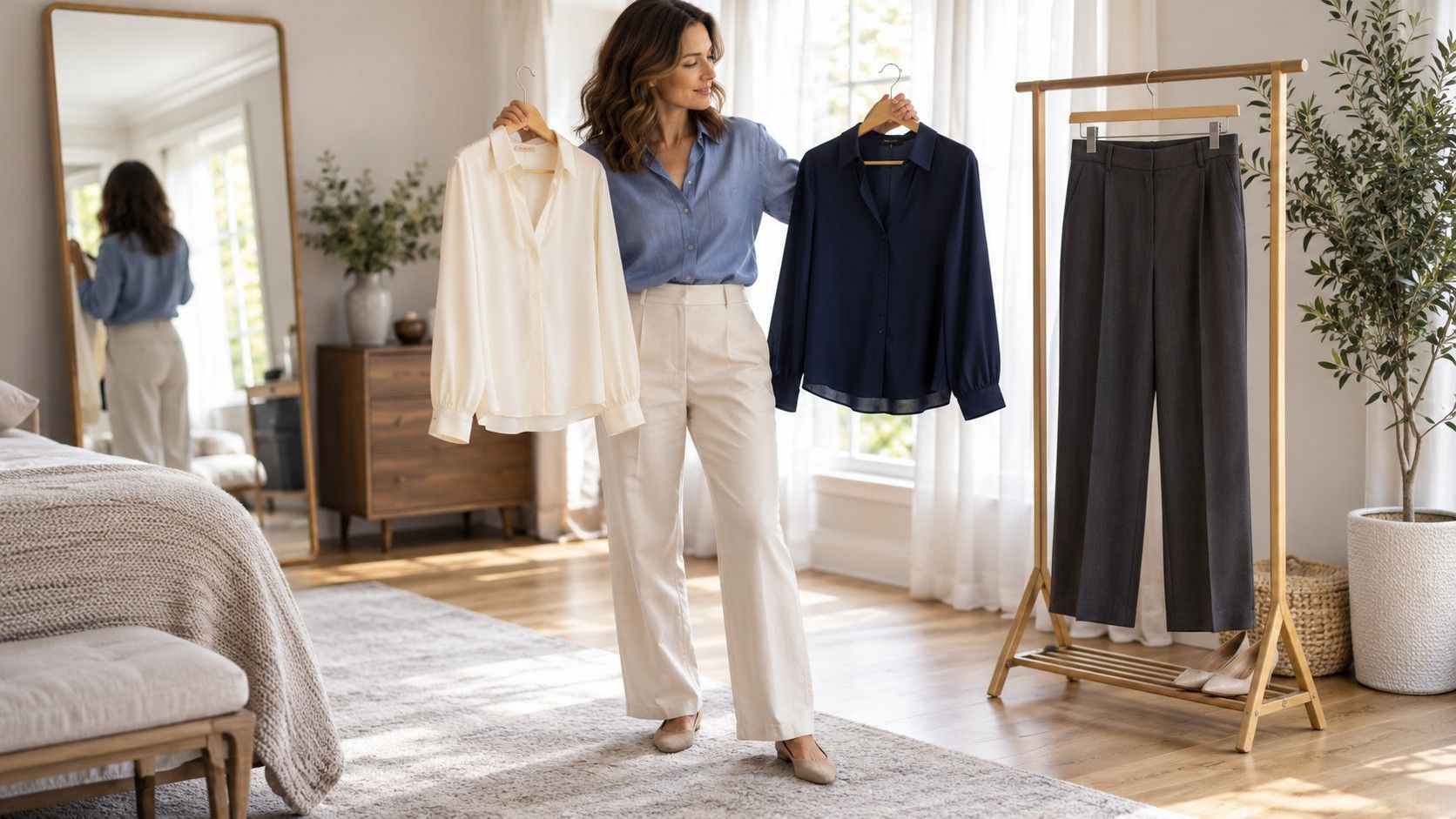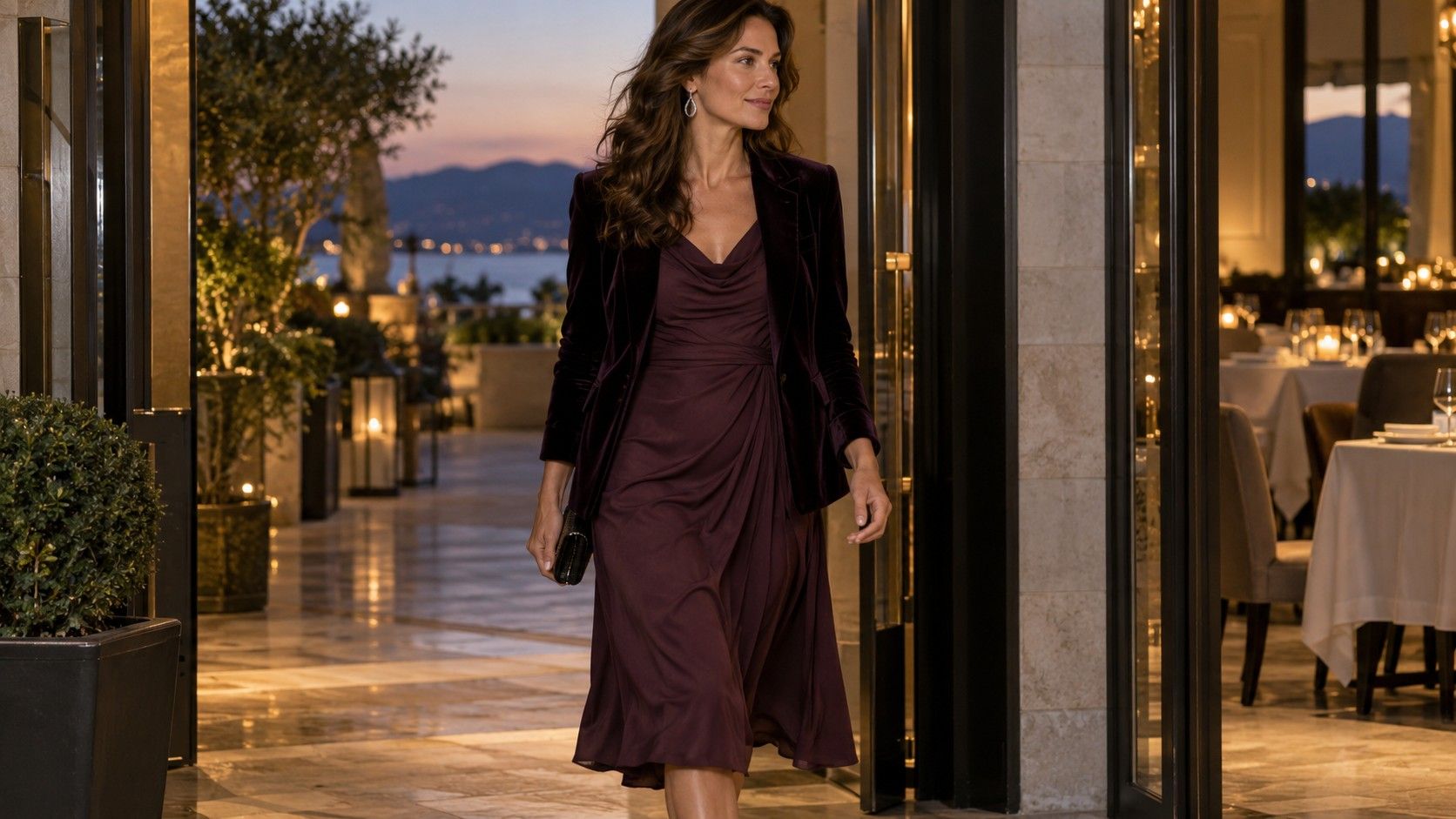
An evening outfit has several jobs: suit the invitation, feel comfortable at a table, work with a coat and still feel like something you would choose. If Soft Natural and Deep Winter are useful references for your wardrobe, begin with those jobs. You can explore movement, rich color and clear contrast without turning either style system into a dress code. The aim is a workable outfit, whether the evening involves a restaurant, a wedding reception or a theatre seat.
Choose an evening mood before choosing a label
A search for soft natural deep winter outfits often brings together two different questions: which shapes feel right, and which colors you enjoy near your face. Soft Natural belongs to a style framework; Deep Winter, sometimes called Dark Winter, belongs to seasonal color analysis. They offer interpretive starting points, not scientific diagnoses or proof that a particular garment belongs on you. You do not need a settled type to compare two dresses in a mirror.
Start with the event itself. A restaurant dinner might suit fluid trousers and a softly gathered top, while a formal reception may call for a longer dress and shoes you can stand in for hours. Choose three words for the mood, such as relaxed, dark and polished. Use them to decide between a crisp tuxedo jacket, a draped velvet top and a glittering fitted dress. All three can be attractive; they tell different stories.
Next, identify the part of dressing that tends to go wrong. Perhaps a high neckline feels restrictive, a full skirt catches under your coat, or you spend dinner pulling a slippery strap back onto your shoulder. Treat that observation as a fitting requirement. A photograph can show the outline, but sitting, reaching for a glass and walking across a room reveal whether an outfit can handle the actual evening.
Keep one familiar piece in the first version. Comfortable black trousers or a favorite pair of earrings reduce the number of decisions and make a new color easier to judge. If a suggested combination looks theatrical to you, lower the shine or remove one accessory before deciding that the whole style reference is wrong.
Let fabric move without swallowing the outfit
Movement comes from the relationship between fabric, cut and fit. A satin skirt cut on the bias can follow your stride; a straight skirt with a vent may offer similar ease with a more defined outline. Neither needs to be oversized. At the fitting stage, look for fabric falling from the waist without gripping, twisting or creating diagonal pull lines when you stand naturally.
Try a softly draped top with trousers that have a clean waistband, or an easy dress with a deliberate shoulder and sleeve shape. When everything is loose, the details can disappear into one broad mass of cloth. When everything is tight, the outfit may lose the ease you wanted. One quieter area of fit gives the more fluid piece somewhere to settle: a smooth hip under a gathered blouse, for example, or a simple bodice above a moving skirt.
Weight matters as much as softness. Thin jersey can cling to an underlayer, while a slightly heavier knit may skim it. Velvet can drape beautifully yet become bulky where a wrap ties. Lift the fabric at the side seam and release it; then watch whether it falls back or holds a fold. This small check is more useful than assuming that every fabric described as soft will behave the same way.
Check the garment in motion with the underwear you expect to wear. Walk several steps, sit fully and raise your arms. A wrap neckline that opens during a reach may need a different size, an unobtrusive fastener or a different design. Comfort is a valid reason to reject it. Alterations can help with a hem or strap length, but do not buy a difficult fit solely because the label seems to match a style recommendation.
Place strong color where you want attention
Deep Winter palettes commonly suggest deep, cool or neutral-cool shades with a sense of clarity. Use that as a set of colors to investigate rather than a promise. A dark berry top, blue-red lip color or cool emerald dress might provide the depth you want; the same color name can describe very different fabrics. Compare the actual garment beside your face in daylight before judging it under warm shop lighting.
You can place contrast in several ways. A pale earring against dark hair creates a small bright detail. An ivory blouse above black trousers makes a much larger division. A deep plum dress with dark shoes keeps the outfit more continuous. If sharp black and white feels too severe for your taste, try charcoal and a clear berry, or dark navy with a small silver accent. Strong color does not require a bright border around every piece.
Watch how shine changes a shade. Matte dark navy can look almost black in a dim restaurant; satin may show blue highlights whenever you move. Sequins and metallic threads add their own contrast, even when the base color is dark. View the outfit from a few steps away as well as close up. A necklace that looks delicate in your hand may become the brightest element once it sits on velvet.
The combination sometimes written as soft natural + dark winter does not require you to soften every color or sharpen every seam. You could keep a relaxed neckline and use a saturated blue, then repeat that blue in a small bag detail. If you already own a warm-colored coat, try it over the finished outfit before replacing it. The practical question is whether you like the visible combination at the doorway, not whether every item receives the same seasonal label.
Compare three evening outfit ideas
For dinner with friends, begin with wide or straight dark trousers, a fluid berry blouse and low-heeled shoes. A partial tuck can suggest the waist if the blouse stays put; leaving it untucked may work better when the hem ends cleanly above the widest part of the trousers. Check the back view and sit at a table. If the blouse bunches against the waistband, try a shorter top before adding a belt.
For a wedding reception, try a deep teal or plum midi dress with a little drape at the waist or neckline. Choose a skirt that permits a normal stride and a sleeve you can raise comfortably. Add earrings with a clear shape and shoes suitable for the venue: a narrow heel may be awkward on grass or between paving stones. A dress that works with stable shoes is more useful than one that only looks balanced on a fitting-room platform.
For a concert or a dressier bar, a dark column of trousers and top can sit beneath an open velvet jacket. The continuous base gives the jacket texture room to show. Keep the sleeve length deliberate, especially if bracelets or a bag strap gather at the wrist. A sleeveless base may feel comfortable indoors, but test the jacket lining against bare skin and check that you are happy removing the outer layer.
Compare these formulas using pieces already available to you. Take photos at the same distance, with the same shoes and lighting, rather than judging a styled shop photograph against a hurried mirror selfie. Note one reason each version succeeds or fails: enough arm movement, too much fabric at the hip, a pleasing neckline, an annoying waistband. These observations give you a shopping checklist that a type label alone cannot supply.
Keep the shoes and layer in the same conversation
The coat is part of an evening outfit, particularly when much of the night happens in queues, taxis or outside a venue. Put it on over the complete look. Sleeves should accommodate the fabric beneath without dragging it up, and the coat should close if the weather requires it. A long dress under a short jacket can look intentional, but compare the visible proportions before committing to the combination.
Shoes establish both mood and walking conditions. A sleek flat can keep fluid trousers polished; an ankle boot may give a light dress more visual weight. There is no universal shoe shape required by a style category. Check where the trouser hem falls with the actual heel height and whether it brushes the ground. For a long evening, consider the route from transport to the door as carefully as the venue floor.
Choose a bag that stays manageable while you hold a drink or remove a coat. A small shoulder bag may be easier than a clutch, especially at a standing reception. Compare its finish with the rest of the outfit: a shiny metal clasp may already provide the bright accent, making another necklace unnecessary. Repeat a metal or color when it helps the pieces feel connected, without trying to match every surface.
Finish with a five-minute rehearsal. Walk, sit, reach and put on your layer; check the outfit once under softer indoor light. Remove or adjust the detail that keeps demanding attention. The most useful result is an evening look you can wear with ease and repeat with a different top, shoe or earring, while the frameworks remain available as suggestions whenever they help.