A summer work outfit has to survive several different rooms: a warm station platform, a crowded train, a desk under an air-conditioning vent and perhaps a formal meeting. If you enjoy the relaxed shapes and gentle drape often associated with Soft Natural styling, those demands need not push you into stiff clothes. Start with the conditions of your day, then use the style idea to refine the outline. Soft Natural is an optional interpretive framework here, not a diagnosis or a fixed dress code.
Dress for the hottest part of the journey
Plan around the part of the day when removing a layer will be hardest. A ten-minute walk in direct sun can matter more than the weather outside an air-conditioned office window. Check the walking distance, whether the platform has shade and how much you carry. For a crowded commute, a loose sleeve and some room across the upper back may be more useful than a jacket that looks polished only while standing still.
Look at fabric construction as well as the fiber label. A thin, tightly woven shirt can feel less airy than a slightly heavier fabric with a more open weave. Linen, cotton and some lightweight blends are options to examine, but a fiber name alone cannot tell you how a garment will feel. Hold the cloth up to the light, feel its weight and check the lining. A light shell over a full synthetic lining may behave very differently from the unlined version.
Sweat marks, transparency and creasing are practical shopping questions. Inspect pale trousers in daylight with the underwear you intend to wear. Press a handful of fabric gently and release it to see how it holds a crease, without mistreating a shop garment. If you prefer a smooth finish throughout the day, choose a fabric whose wrinkling you can tolerate rather than expecting linen to remain freshly pressed after an hour sitting down.
Find ease without losing a clean outline
The useful distinction is between room that supports movement and extra fabric that needs arranging. A blouse can skim the torso while still fitting cleanly at the neckline. Trousers can have space through the thigh without dragging at the hem. For soft natural summer outfits, treat relaxed drape as an experiment in garment behavior: fabric falls, seams sit comfortably and you can move without repeatedly adjusting the clothes.
Begin with the shoulders and upper back. Reach forward as though you are holding a rail on a train, then let your arms drop. If the shirt stays bunched or the buttons pull, try another size or cut. A dropped shoulder may be an intentional design detail, so seam position alone is not a pass-or-fail rule. Look at how the whole garment behaves when you move and how much volume you want under your outer layer.
A soft waist reference can be enough if you like some definition. Try a partial tuck, a blouse with a gentle shaped hem or trousers that sit comfortably at your preferred rise. You do not need a tight belt. A belt that feels fine for a mirror photograph may press into your middle at a desk; test it seated and after a full breath. Keep the option that makes the outfit easier to wear.
Necklines deserve a separate check. An open collar, shallow V or rounded opening may give the breathing room and visual softness you want, but workplace coverage and personal preference come first. Lean toward a laptop and reach across a table. If you need to keep monitoring the opening, try a different neckline rather than automatically adding another warm layer underneath.
Try two breathable work outfits
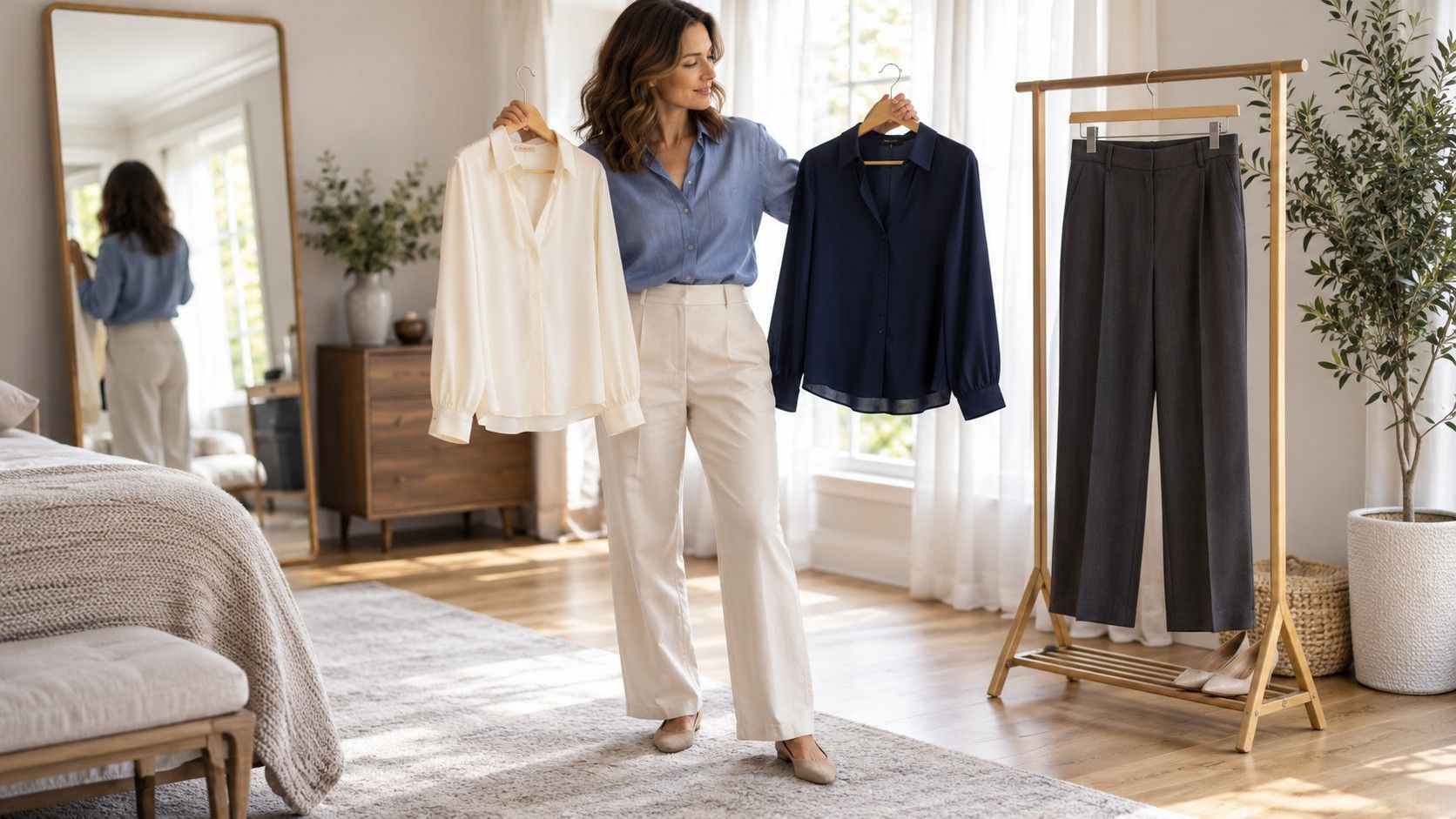
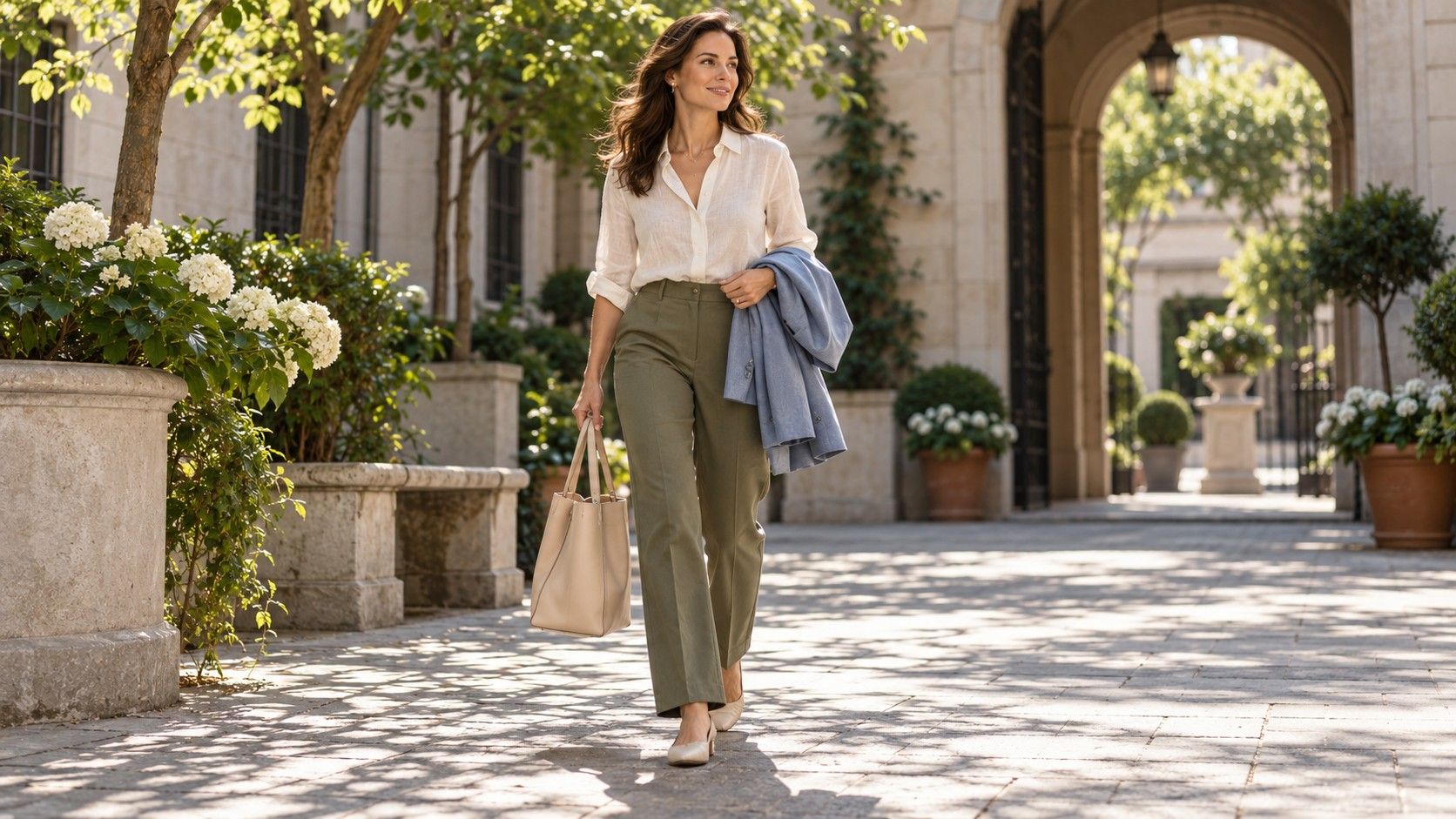
For an office that accepts separates, start with an unlined, gently draped blouse and straight or softly wide trousers. An ivory blouse with muted olive trousers creates a quiet contrast; a blue blouse with charcoal offers another version. Use colors you already enjoy near your face. The word “summer” in this outfit problem refers to the weather, and does not mean you must belong to a Summer seasonal color palette.
Check the blouse length before deciding how to wear it. A curved hem may work loose over a higher-rise trouser, while a longer shirt may feel cleaner with a small tuck. Walk and sit in both versions. If tucking creates a thick bundle under the waistband, look for a shorter or lighter top rather than forcing the styling trick. Add a simple shoe that meets your office rules and stays secure during the commute.
The second option is a softly shaped midi dress with a short sleeve or a sleeveless cut your workplace permits. Choose enough room for your normal stride, with a neckline that stays comfortable when seated. A side slit or fuller skirt may help movement, but inspect how it opens on stairs and when you cross your legs. A waist seam or adjustable tie can provide shape without needing to be pulled tight.
| Workday situation | Starting outfit | Useful adjustment | Check before leaving |
|---|---|---|---|
| Mostly at a desk | Fluid blouse and straight trousers | Soft tuck or shaped hem | Waistband and blouse stay comfortable seated |
| Warm walking commute | Unlined midi dress and secure shoes | Carry the office layer | Stride, coverage and bag friction |
| More formal meeting | Simple blouse and tailored trousers | Light jacket with room in the sleeves | Jacket closes and allows reaching |
Keep accessories manageable. A necklace that catches on a fine blouse or a heavy bag that pulls the shoulder can make an otherwise useful outfit frustrating. Try a small earring or one uncomplicated necklace if you want detail, then put on the actual bag. The finished outfit includes the objects you carry, rather than stopping at the edge of a photograph.
Make an air-conditioned layer useful
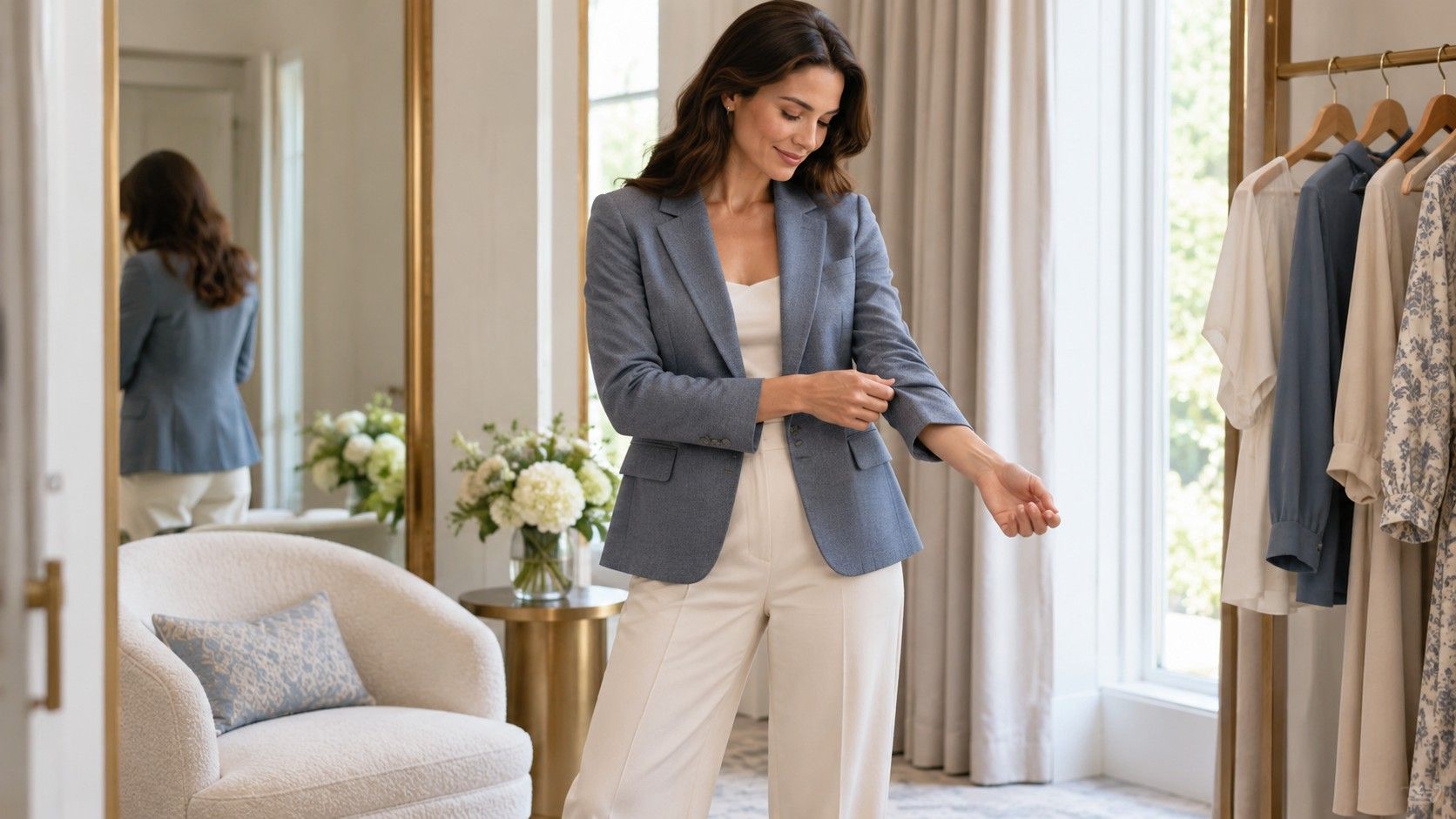
Select the layer for the time you will spend wearing it. A light jacket can be useful for meetings, while a fine cardigan may be more comfortable for long stretches at a desk. Check sleeve room over the chosen blouse: fabric packed into the upper arm can restrict movement even if both items fit separately. A slightly roomy armhole is only helpful when the jacket still sits securely and feels comfortable.
Length changes the relationship between the pieces. Try a cardigan ending around the upper hip against a longer version over the same trousers. Look at the opening down the front and the amount of fabric around the pockets. If the cardigan repeatedly slips backward or gathers on the chair, that specific cut may require too much attention. A shorter layer or a different fabric can solve the problem without changing the whole outfit.
For an office that expects a blazer, look for a construction that gives enough structure for your dress code while allowing easy movement. An unlined or partially lined version is worth trying, although lining can also help sleeves slide over a blouse. Do not assume the softer-looking option will feel cooler. Check the fabric, try the full combination and compare the weight in your hand.
Carry the layer in a way that protects it. A cardigan may fold into a tote, while a jacket might crease sharply under a laptop. If you intend to leave a layer at work, choose a neutral that works with several outfits and check where you can store it. That arrangement makes sense only if you can still manage unexpected cool weather during the journey home.
Check the outfit while sitting and walking
Give the full outfit a short trial at home, including shoes and bag. Sit for several minutes, stand up without rearranging everything and walk across the room. Notice which pieces recover on their own. A little wrinkling is normal for many summer fabrics; constant pulling at a hem or collar is a different issue. Decide whether that level of adjustment would annoy you by the middle of the working day.
Use a chair similar to your desk chair if possible. A dress may ride up when the seat grips the fabric, and trousers may feel tighter across the lap than they did in the changing room. Reach toward a keyboard and raise your arms to the height of a commuter handrail. Check sleeve tension, underarm coverage and whether the waist seam moves into an uncomfortable position.
Walk a few steps at your normal pace, then take a longer stride. Check whether a wide trouser hem catches under the shoe and whether the dress permits stairs without being held up continuously. Look at the bag strap where it crosses the blouse. Delicate fabrics can be vulnerable to friction; a smoother strap or a different bag may make that garment more practical for the journey.
After the first workday, keep one short note about comfort and one about appearance. “Layer too warm on the train” suggests carrying it. “Blouse bunches under cardigan” suggests changing the pairing. Avoid turning a single unsuccessful item into a verdict about your body or a style identity. Keep the pieces that handle the day, and refine the detail that caused trouble. A relaxed summer wardrobe becomes dependable through those small, specific decisions.