A sweater can look inviting on a hanger and become frustrating by lunchtime: the hem stretches, the shoulders slide or the sleeves collect under a coat. Choosing knitwear through Soft Natural and Soft Autumn references works best when you keep those ordinary problems in view. Use shape and color as things to compare, then let comfort, fabric behavior and the rest of your wardrobe decide what stays. A useful knit should still make sense after you have sat down, walked outside and worn it for several hours.
Notice what the knit does on your body
If you are exploring soft natural soft autumn combinations, separate the two references first. Soft Natural is part of an interpretive style system; Soft Autumn is a seasonal color category often associated with muted, relatively warm colors. Neither is a scientific assessment of your body or a requirement to wear a particular sweater. You can borrow an idea about drape or color without confirming a permanent label.
Begin with a sweater you already find comfortable. Notice where the shoulder seam sits, how the sleeve joins the body and whether the hem hangs straight or gathers. A dropped shoulder can provide ease, but an extremely low seam may add fabric beneath the arm that bunches under a coat. A closer shoulder can work well too, provided the armhole and sleeve allow comfortable movement. Evaluate the garment in front of you rather than its category name.
The surface should tell you something about the fit. Horizontal stretching across the chest, buttons pulling apart or a hem climbing toward the waist can signal insufficient room or a cut that does not suit the intended layer. Extra fabric is not automatically better: a long, heavy knit may pull itself down and obscure details you wanted to keep. Try the next size only as a comparison, then check whether the shoulder and neckline still sit comfortably.
Move before making the decision. Reach forward as though using a keyboard, lift a bag onto your shoulder and sit with your arms resting on your lap. Look again after the knit settles. If the neckline needs constant straightening or the sleeves keep slipping over your hands, that is useful information.
Separate warm color from heavy texture
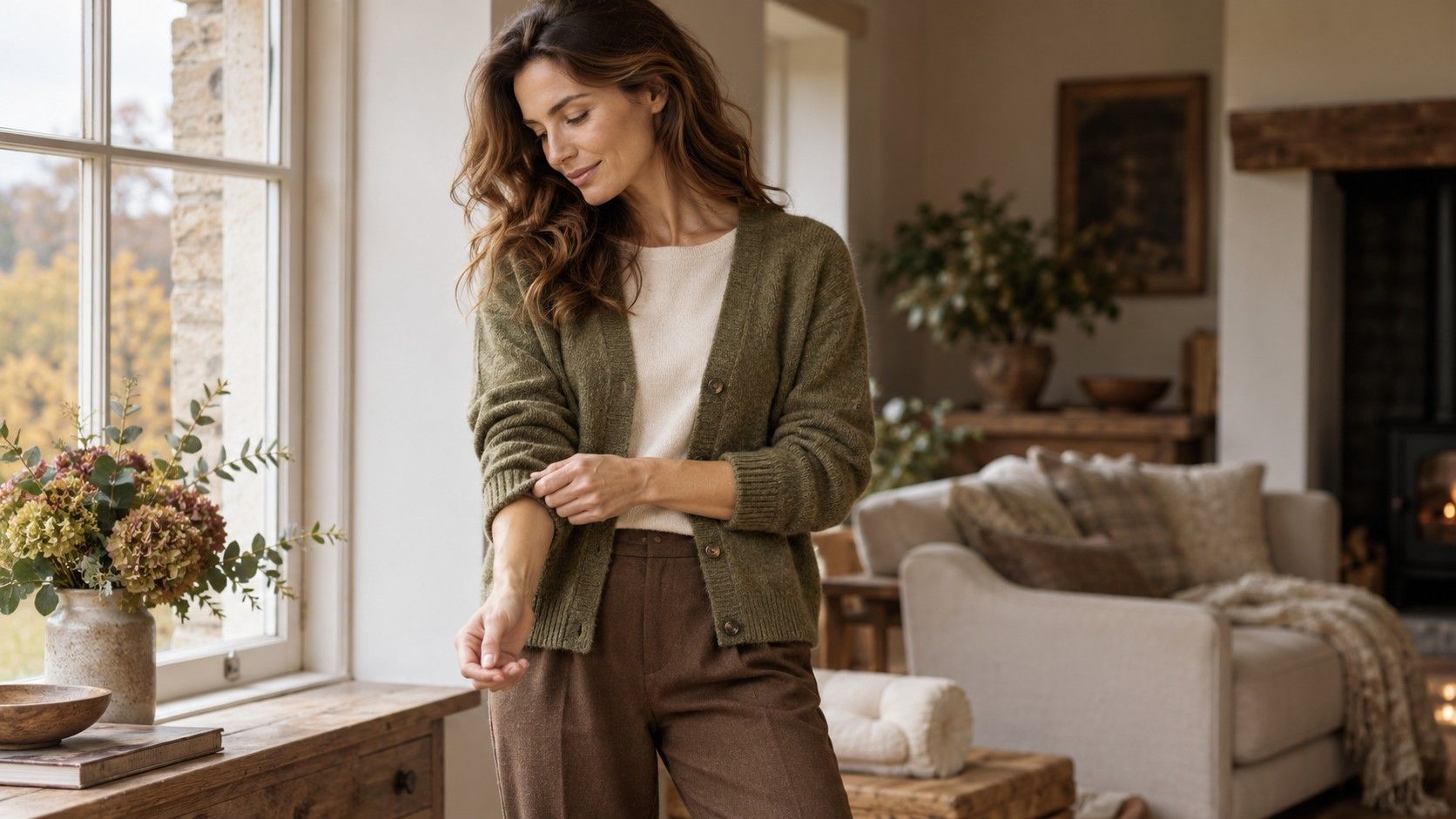
A warm or muted palette does not demand a thick, rustic knit. A fine-gauge cardigan in olive, a smooth top in dusty peach and a textured sweater in muted brown can all explore similar color territory with very different weight. Choose the warmth you need for the setting first. A heated office with a winter commute may call for a lighter sweater plus a coat rather than a dense sweater worn all day.
Compare actual shades near your face in indirect daylight. Soft Autumn references often include subdued greens, warm browns and softened peach tones, but names on product pages are unreliable. One oatmeal may look creamy and warm, another gray; one terracotta may be muted, another quite bright. Hold the garment beside a neutral top you know well and ask whether you like the result.
Texture introduces light and shadow. Cable stitches create stronger ridges than fine stockinette, and a fluffy surface can make a color appear less clear. If a heavily textured sweater seems visually busy, try a quieter stitch before changing the color. Conversely, a simple outfit may benefit from a small amount of texture at the cuff or front panel.
Think about the garments beneath the knit too. A smooth T-shirt may slide comfortably under a cardigan, while a textured blouse can catch on the inner surface. Hold two fabrics together and move them gently to see whether they cling. A lighter color can reveal a dark underlayer or pocket outline, so check the combination in the light where you will wear it. Opacity and comfort matter more than the fiber name sounding luxurious.
Compare cardigan lengths with one outfit
Use the same trousers, base top and shoes to compare cardigan lengths. Changing all four pieces makes it difficult to identify what helped. A cardigan ending near the waistband leaves most of the trouser shape visible; one reaching the upper hip offers more coverage; a longer version creates a larger outer outline. None has a universally correct relationship to a body type. The useful length depends on the outfit and the effect you prefer.
With full trousers, try a shorter cardigan worn open over a base top that ends cleanly at the waistband. Then compare a longer cardigan with a straight, less voluminous trouser. These are starting experiments, not restrictions. If you like both a long layer and wide trousers, look for a cardigan that falls without catching at the hip and shoes that keep the hem clear of the ground.
Button placement changes the result. Fastening one or two central buttons can create a different shape from closing the whole front; leaving it open exposes a continuous base underneath. Check that the chosen arrangement stays comfortable when you sit. Gaping between buttons is a fit issue worth addressing, even if the cardigan looks fine standing still. Avoid depending on one strained button to keep an entire outfit together.
Use a mirror and two comparable photos to decide where you like the hem. Look at the overall balance, then return to the practical details: pockets you use, a bag strap that does not snag and a coat that accommodates the cardigan. A length that photographs well but catches beneath your outerwear may be better reserved for indoor wear.
Choose a neckline you can live in
Neckline advice can become unnecessarily rigid. An open neckline, a gentle V, a scoop or a small collar can each be worth trying if they suit your taste. What matters in daily use is whether the opening lies comfortably, covers what you want covered and works with the layer beneath. A lower neckline that requires constant adjustment is less useful than a higher one you can forget about while working.
Check the neckline with your normal posture. Stand, sit and lean forward slightly. A wide opening may slide toward one shoulder, particularly in a heavy cardigan; a narrow crew neck may feel fine in cotton and less pleasant in a fuzzy yarn. If you like the sweater but dislike direct contact at the neck, compare it over a thin base layer.
Collars and scarves affect the surrounding space. A shirt collar can add a clear line above a soft knit, while a broad scarf may hide the neckline completely outdoors. Try the combination with your usual coat before choosing a thick roll neck. Several layers can become uncomfortable beneath the chin even when each feels pleasant on its own.
Jewelry needs a practical check as well. A pendant can catch between open stitches, and a rough clasp may pull at a fluffy surface. Smooth earrings or a brooch designed for the fabric might be easier, although any fastening should be tested gently. Let the neckline remain simple if that makes getting dressed easier.
Keep a useful knit through repeated wear
Before buying, read the care label and consider whether the instructions fit your routine. A sweater that needs careful hand washing may be reasonable for occasional use and awkward as an everyday work layer. Fiber content alone does not tell you exactly how a finished garment will perform: yarn construction, stitch and finishing also matter. Inspect seams, button attachments and the recovery of cuffs rather than assuming a price or a familiar fiber guarantees durability.
Gently stretch a small section of cuff within its normal wearing range and see whether it returns. Look for even stitches and secure joining at the underarm, where movement puts the garment to work. A dense rib may hold a hem neatly or grip more firmly than you want. If possible, leave the garment on for a few minutes during the fitting rather than deciding at the first glance. Watch for sagging pockets and sleeves that lengthen as the fabric relaxes.
Follow the garment instructions for washing and drying. When flat drying is recommended, support the full knit rather than letting wet sleeves hang over an edge, and reshape it gently to its intended dimensions. Store pieces in a way that avoids prolonged pulling at the shoulders; folding is often practical for heavier knits. Treat pills carefully with a suitable tool and a light hand, checking the care advice before working on a delicate or loosely knitted surface.
Keep a small record of what actually earns repeat wear: the cardigan length that fits beneath your coat, the neckline that stays comfortable and the color that works with several bottoms. Use those details for the next purchase. A muted olive cardigan with reliable buttons and an easy sleeve can be more valuable than a theoretically perfect sweater that never leaves the drawer. The framework has done its job when it helps you notice those useful distinctions.