An office outfit has to survive more than a standing mirror check. There is the coat pulled over it, the commute, a long meeting and a chair that changes how every waistband feels. If you use Soft Classic for outfit shape and Soft Autumn for color, the useful overlap is a wardrobe with considered proportions and gentle color transitions. Both are optional styling frameworks, with room for interpretation. Start with the clothes and working conditions you have, then use the labels to make small, visible choices.
Translate the labels into an outfit goal
A search for soft autumn soft classic often brings up neat jackets, warm neutrals and restrained accessories. That can be a helpful starting point, but a photograph rarely tells you whether the trousers allow an easy stride or the blouse stays comfortable under a jacket. Set a more practical goal: an outfit that looks composed at your desk, lets you move freely and has enough difference between pieces to feel intentional.
For this wardrobe experiment, treat Soft Classic as a prompt to explore moderate proportions, a little shaping and fabric that falls without collapsing. Treat Soft Autumn as an invitation to compare muted, relatively warm shades. These descriptions are working ideas for dressing, not a diagnosis of your body or a requirement to follow a prescribed silhouette. A color you enjoy and a jacket that fits can earn their place without agreeing with every label.
Choose the strongest office requirement first. A client meeting may call for a jacket, closed shoes and a tidy neckline; a shared studio may allow a fine knit and trousers. Decide where structure matters and where softness is welcome. A relaxed blouse can sit inside a more defined trouser shape, while a pliable jacket can make a simple dress feel finished without turning the whole outfit stiff.
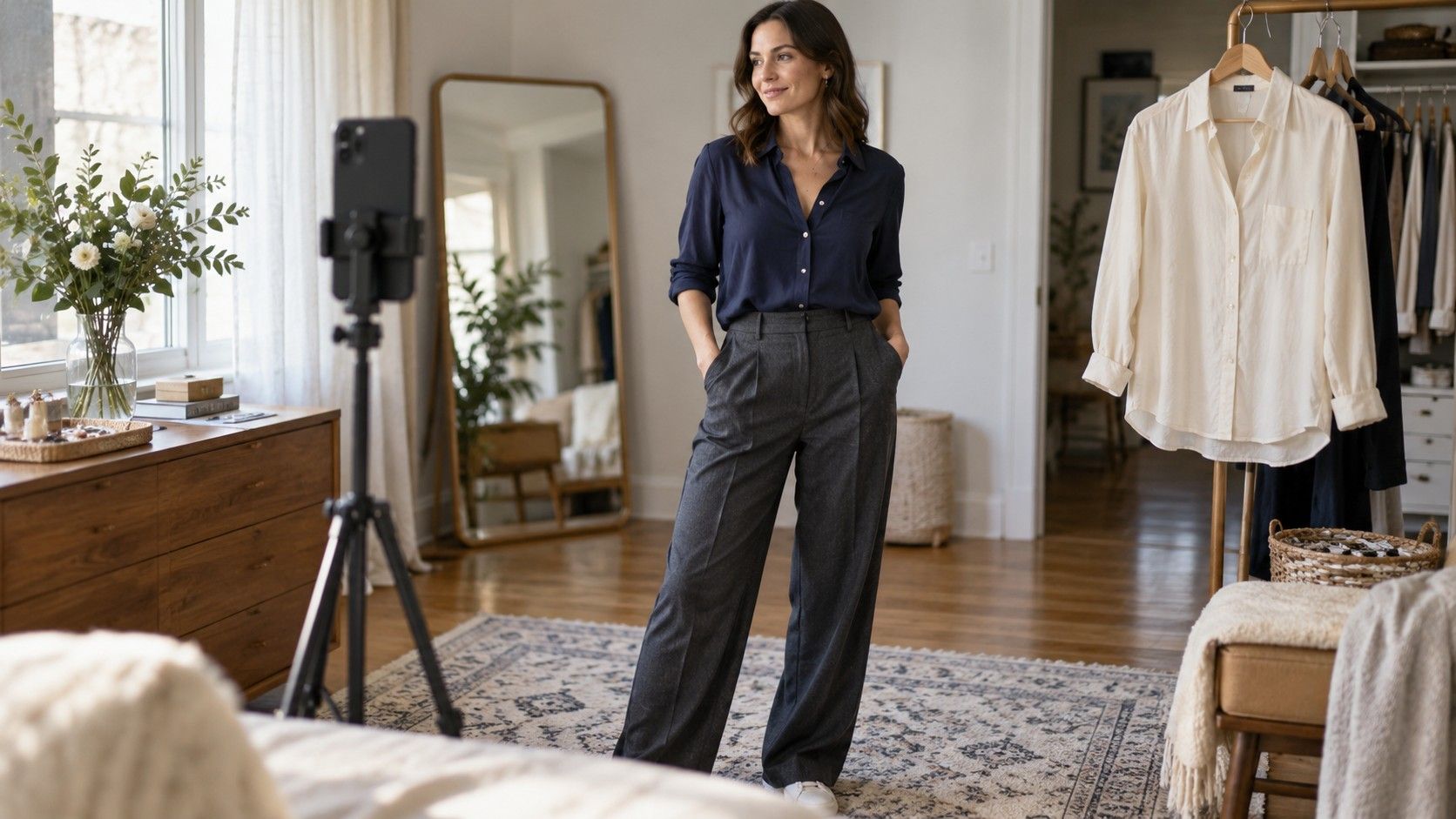
Use one outfit as a reference before shopping. Put on your most comfortable work trousers and a plain top, then check the front, side and seated view. Notice whether you prefer a visible waist, a straighter fall or a small amount of blouse fabric above the waistband. The answer belongs to that outfit and your preference; it does not prove or disprove a style identity.
Build a quiet palette without matching everything
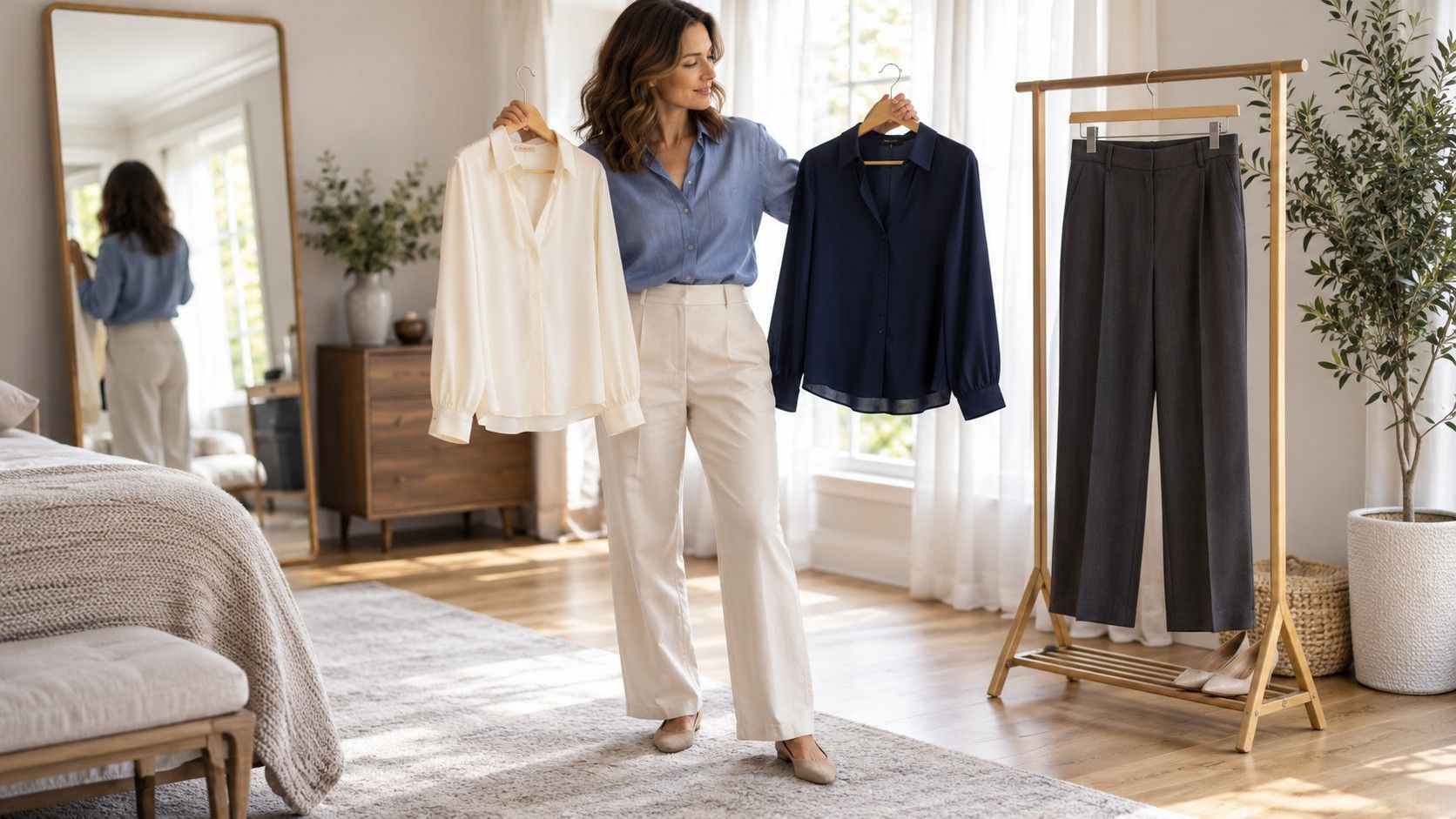
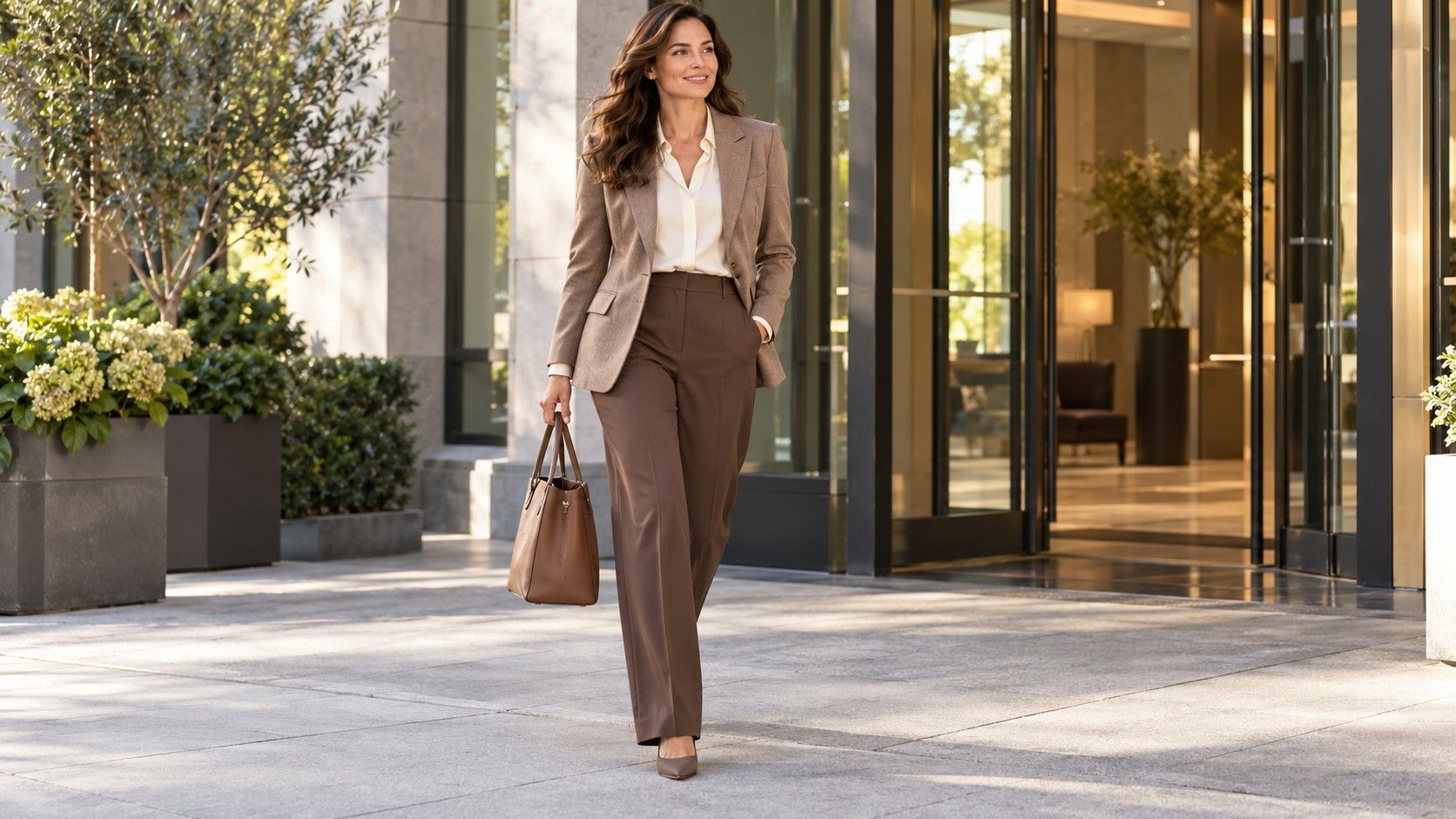
A quiet palette still needs visible differences. Mushroom trousers, an oatmeal top and a camel jacket may blend attractively, but three almost identical midtones can also look accidental. Try separating them by lightness: a lighter blouse, a middle-value jacket and a deeper trouser. Keep the warmth similar enough to connect the pieces, then let the change in depth provide definition.
Useful colors to compare include muted olive, warm taupe, soft cocoa, dusty peach and subdued teal. None is a compulsory Soft Autumn purchase, and the same color name can describe quite different fabrics. An olive blouse might lean yellow in daylight and appear nearly gray beneath office lighting. Hold the actual garments together, close to the face if that matters to your choice, before judging them from a product name.
Choose two repeating neutrals and a small group of accents from your existing wardrobe. Cocoa and warm gray, for example, can support a peach blouse or a muted green knit without every piece matching. Shoes and a bag need not duplicate one another. Repeating one color somewhere else, such as a brown shoe with a narrow brown belt, can connect the outfit while leaving the bag independent.
Choose a jacket by fit and movement
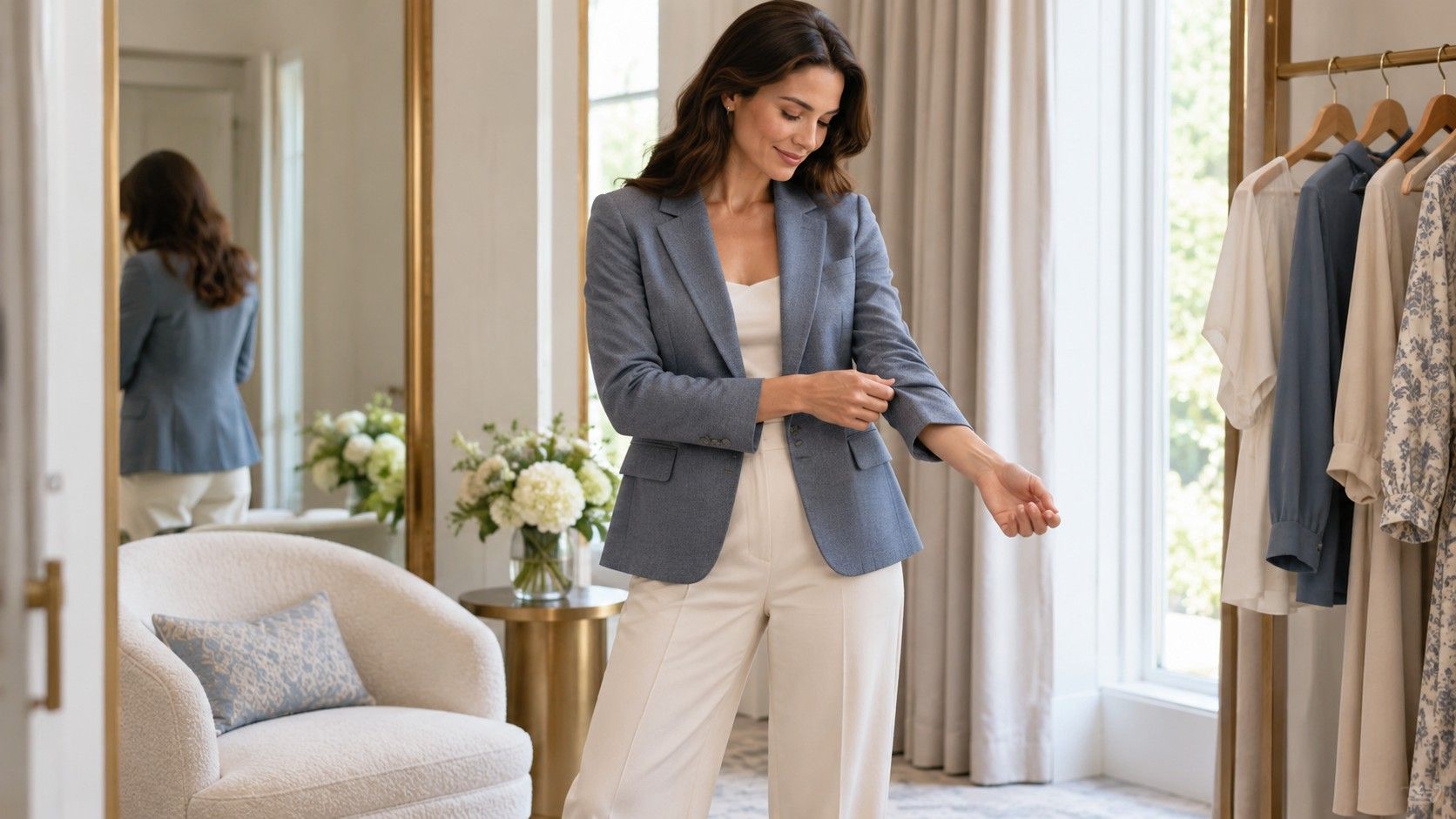
The right jacket begins with your usual working posture. Try it over the kind of blouse or knit you actually wear, fasten it if you intend to wear it closed, and reach forward as though using a keyboard. The back should allow that motion without a persistent pulling sensation. A neat standing outline is less useful if the sleeves drag every time you reach for a mug.
Look at the shoulder and armhole together. A seam sitting close to the shoulder can create a tidy outline, but the cut and fabric decide how much movement remains. A slightly extended shoulder is not automatically wrong, either. Compare how the jacket hangs when your arms rest and when you bend them. Deep folds, twisting sleeves or a collar that keeps lifting are reasons to try another cut or size.
For softly structured workwear, compare a lightweight woven blazer with a substantial knit jacket. The woven version may hold the neckline and pockets more clearly; the knit may feel easier through a long seated day. Thin jersey can cling to the layer beneath it, while heavy tailoring can feel excessive over a light blouse. A smooth lining can help a jacket slide over sleeves, but check the care label and how warm the whole combination feels.
Length deserves a side-by-side test. A jacket ending near the upper hip can suit one pair of trousers, while a longer line may work better with another rise or leg shape. Take a full-length photograph at roughly waist height, then sit down. If the hem bunches against the chair or the front pushes upward, wearing it open or choosing a different length may be more useful than altering the blouse.
Before paying for alterations, distinguish a local fit problem from a different jacket shape. A sleeve shortened slightly is a different project from a tight upper back or a shoulder that does not sit comfortably. Ask a tailor what can realistically change and at what cost. Clothes with compatible proportions usually give you a better starting point than a garment that needs several major corrections.
Try separates for three working days
Build a small rotation around one trouser and one jacket before planning a large capsule. On a meeting day, pair cocoa trousers with a muted cream blouse and a warm gray jacket. A softly pointed or rounded closed shoe can finish it according to your taste. Check that the blouse neckline stays in place when you lean forward and that the jacket closes cleanly over the tucked fabric.
For an ordinary desk day, keep the trousers and change to a muted olive fine knit. A partial or full tuck can show the waistband, but only use it if the knit lies comfortably and stays put. If the hem makes a ridge beneath the jacket, try an untucked top with a cleaner lower edge. The aim is a calm junction between garments, not repeated adjustments every time you stand.
On a more relaxed day, use the same jacket over a dusty peach top with a skirt in a deeper neutral. Test the skirt with the actual shoes: a hem that feels easy with low shoes may move differently with a heel. If you prefer trousers every day, change the top texture instead. A matte woven blouse and a fine ribbed knit can make a familiar base feel different without needing a fresh color scheme.
Lay out all three combinations with their underwear, socks or hosiery and outerwear. These small pieces often expose the gap in an otherwise sensible plan: visible seams beneath thin trousers, a sock color that breaks up a preferred line, or coat sleeves too narrow for the jacket. Solve the repeated inconvenience first. It is usually a better purchase target than another attractive blouse.
Keep a short note after wearing each outfit: too warm by lunch, sleeve caught under jacket, trousers comfortable when seated. This is wardrobe information, not a score for your appearance. After a week, the useful pattern may be a need for lighter layers or smoother waistbands rather than a need to refine your style category.
Change one detail when the outfit feels too formal
When the outfit looks overly careful, change one visible feature and leave the rest alone. Swap the buttoned blouse for a simple knit, turn the jacket sleeves back if the construction allows it, or replace a matching necklace and earrings with one piece you enjoy. A single adjustment makes it easier to see what was causing the stiffness.
Accessories can soften or sharpen the same clothes without following a fixed formula. A matte leather bag, small textured earrings or a gently curved shoe may echo the softer fabrics. A crisp watch or a more angular bag can introduce a pleasing point of difference. Check practical scale as well as shape: a bag should hold your work items, and a bracelet should not keep hitting the desk.
If the palette feels dull, add depth before buying a brighter color. Try a deeper teal blouse under a warm gray jacket, or a cocoa shoe beneath lighter trousers. If the outfit feels busy, remove one repeated detail such as a patterned scarf, prominent belt or decorative collar. Keep enough contrast to distinguish the pieces and enough simplicity to feel like yourself.
The best stopping point is an outfit you can put on without negotiating with it all day. You can borrow the gentle contrast associated with Soft Autumn and the considered proportions you enjoy in Soft Classic styling, then keep whichever parts help. Fit, comfort, office expectations and your own taste remain the final checks.