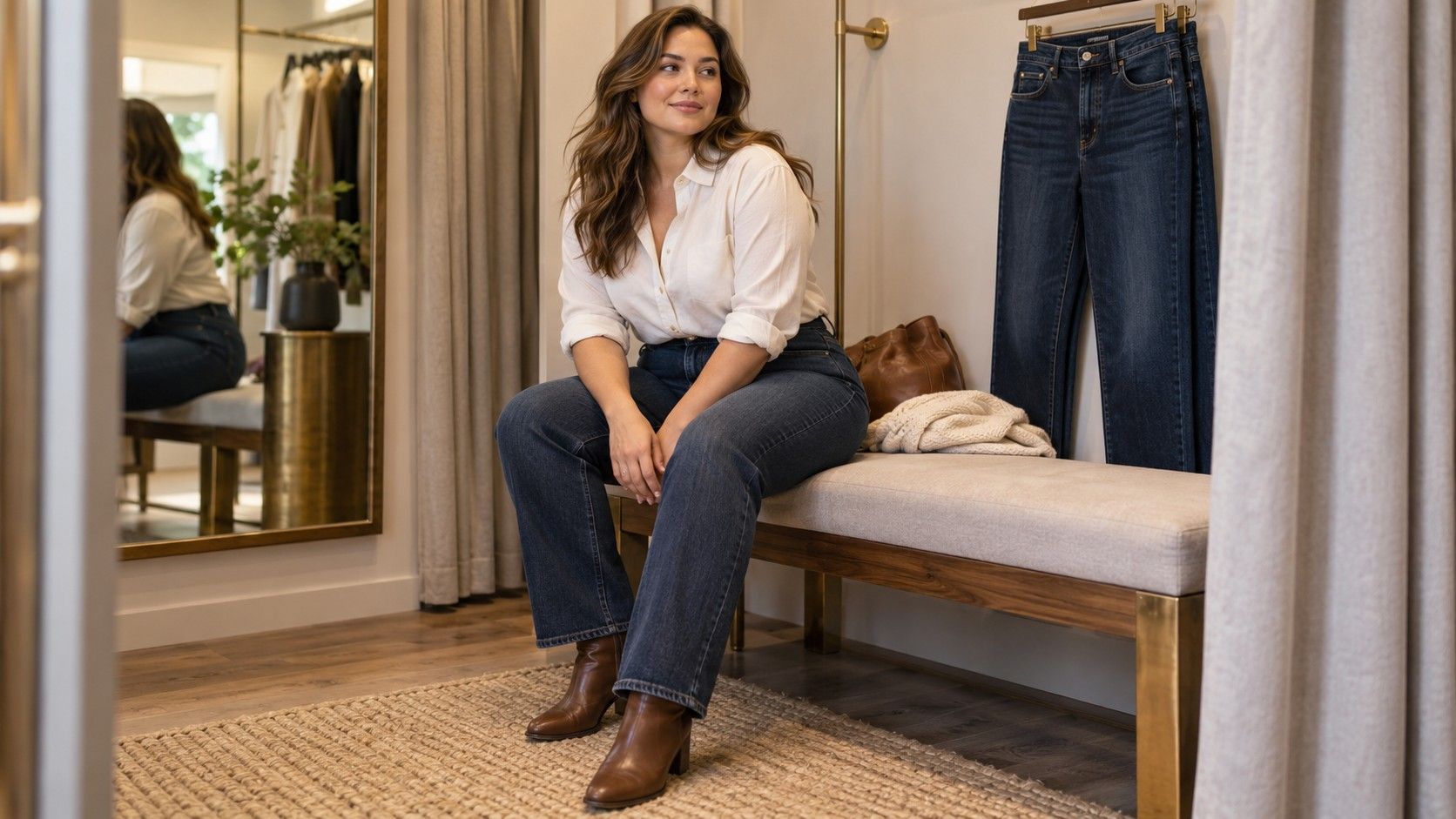
Jeans shopping gets easier when the question changes from which body label fits to which pair lets you sit, walk and dress as you like. The phrase peach body type appears in informal style discussions, but it does not give a reliable denim specification. Two people using the same label can need different rises, waistband shapes and lengths. Bring the focus back to the fitting room: the right comparison is between garments on you, with enough time to notice what happens after the first glance.
Ask what the label is trying to describe
Before using peach body type as shopping advice, ask what the writer means by it. Informal shape names do not have a universal definition, and a fruit label cannot describe every relationship between waist, seat, thighs and leg length. There is no need to decide whether you qualify. If the underlying problem is jeans that fit through the hips but leave room at the back waist, name that problem directly. It points toward something you can actually compare.
Write down two fit frustrations and one preferred look before shopping. For example: the waistband slides when you walk, the front pockets gape when you sit, and you want a straight leg that works with flat shoes. That is enough direction for a focused fitting session.
Bring a familiar top and the underwear you normally wear with denim. A tucked blouse, a long sweater and a cropped T-shirt can make the same rise look quite different, so choose a consistent starting point. If you plan to wear the jeans for work, include the shoes or belt you expect to use.
Treat size as a way to locate a garment on the rack. Try nearby sizes when useful, because different cuts and fabrics can fit differently within the same brand. A pair that closes easily still needs movement checks, and a pair that refuses to close is simply unsuitable in that size or cut. You are looking for a garment that accommodates you comfortably.
Check the waistband while seated
Standing tells only part of the story. Sit fully on a chair or fitting-room bench with your feet on the floor. Notice whether the waistband digs, folds sharply, slides down or presses against a place you would rather leave free. Lean forward a little, as you might at a desk. If you instinctively undo the top button, the jeans have already supplied a useful answer about their suitability for that day-to-day use.
Look at the back waistband while standing and again after sitting. A gap can reflect a mismatch between the waistband shape and your proportions, but its significance depends on how the jeans behave. A small gap that causes no slipping may be unimportant to you; a waistband that drops every time you walk may need a different cut. Do not assume a belt will solve everything. Tightening one can gather excess fabric without improving the underlying fit.
Check the button and zip area without holding your breath or adjusting your posture. The closure should work normally, and the front should not rely on the zip to pull two strained sides together. Some creasing is ordinary when denim bends. Deep pulling lines, discomfort or pockets that are forced open deserve another size or style comparison rather than a promise that every problem will disappear with wear.
Remain seated for a few minutes if the fitting-room arrangement allows it. Then stand and walk without tugging the waistband back into place. Stretch denim may feel easy initially, while a firm waistband can become more noticeable during sitting. For online orders, keep tags on during these checks and follow the return conditions.
Compare rise and room through the hips
Rise describes the distance through the crotch area to the waistband, but descriptions such as high or mid rise are only a starting point. Where that band lands on you depends on the garment and your proportions. Compare two rises using the same top. One might sit securely above the hip while another rests comfortably lower. Prefer the one that works with your movement and wardrobe rather than assuming a higher rise is always more flattering.
Look for enough room through the seat and upper thigh to walk and sit. A rigid fabric needs a cut that supplies the required ease; added stretch may change the feel but does not automatically fix an unsuitable shape. Check the fabric composition and care label, then judge the actual pair. A soft touch on the hanger cannot tell you whether the waistband will stay comfortable during a long journey or a morning at a desk.
Inspect the side seams and pockets while standing naturally. A seam that twists strongly toward the front or back may indicate how the garment is hanging, though construction and deliberate design can also affect it. Compare another pair rather than diagnosing the cause from one line. Front pockets that lie flat in one cut and open in another can help you spot which offers room where you need it.
Labels such as curvy fit can be useful search terms when you want a different waist-to-hip relationship, but the result varies by brand and style. Compare measurements if they are supplied, especially the waistband, rise and thigh width. Ask whether garment measurements are taken flat or around the body before comparing numbers. Keep notes on the specific style that works; a broad marketing term is less useful than a repeatable fit reference.
Try straight and wide legs with the same shoes
Once the upper fit is comfortable, compare leg shapes without changing your shoes or base top. A straight leg offers a relatively consistent line toward the ankle; a wide leg has more room and a broader outline, although individual cuts vary. Neither needs to balance or correct your body. Choose between the visual effect you enjoy and the practical behavior you need, including how the jeans feel when walking through a busy day.
Length can change the impression more than the name of the cut. A straight leg that bunches heavily over a shoe can look and feel quite different from the same leg hemmed to clear it. A wide leg that brushes the ground may be awkward outdoors, especially in wet weather. Fold the hem temporarily to compare lengths, keeping both sides even.
Walk toward and away from a mirror, then turn sideways. Notice whether fabric catches at the calf, whether the hem moves freely and whether you like the amount of volume beside your shoe. Try a few ordinary steps rather than posing with one leg extended. If your usual footwear includes both trainers and boots, decide which matters most for this pair. One hem length may not work equally well with every shoe you own.
Use wash and pocket details as separate decisions. A dark wash can make seams less obvious, while fading and contrast stitching draw attention to particular areas of the garment. Large back pockets, small pockets and their placement create different visual effects, but there is no single correct arrangement. Photograph the back view if it helps you compare. Keep the fit you prefer, then choose the finish you would happily wear with your existing tops.
Know when alteration is worth considering
Alteration is worth discussing when the jeans are already close to working and the remaining change is specific. Hemming can be straightforward for some cuts, although it may alter a flare or remove an original distressed edge. A waistband adjustment can be more involved, particularly around belt loops, pockets and a back yoke. Ask a tailor what the proposed change will affect before buying a pair that depends on it.
Bring or wear the intended shoes to a hem fitting, and explain whether you want to keep the original hem finish. Ask for the total price before committing so you can compare the finished cost with another pair. If the jeans need more room through a tightly fitted seat, a tailor may have little fabric available to release. Construction limits matter; altering down and adding space are different tasks.
Avoid building a purchase around several uncertain repairs at once. If the rise feels wrong, the legs twist and the waistband needs a large change, another cut may save money and frustration. Keep an acceptable return option while assessing a new purchase, and do not wash or alter it before deciding. For secondhand jeans, inspect wear at the inner thighs, zip and pockets so an attractive price does not hide repairs you did not plan for.
Once you find a useful pair, record the style name, size, composition and measurements that helped. Follow the care instructions, and check the fit after normal wear before buying duplicates. The goal is a dependable reference you can use on the next shopping trip: a comfortable seated waistband, enough room to move and a hem that works with your shoes. An informal body label can then remain optional background rather than the decision maker.