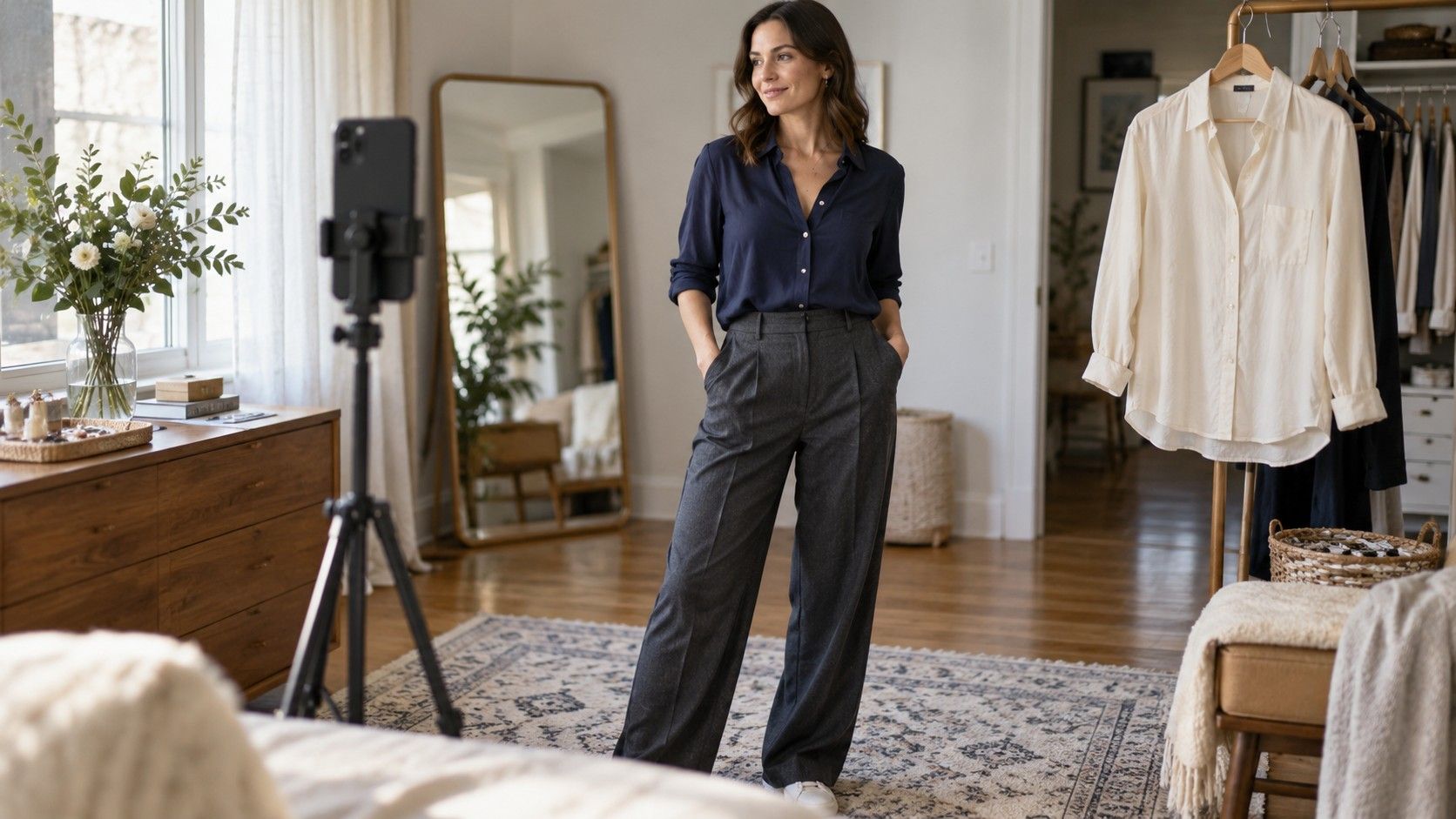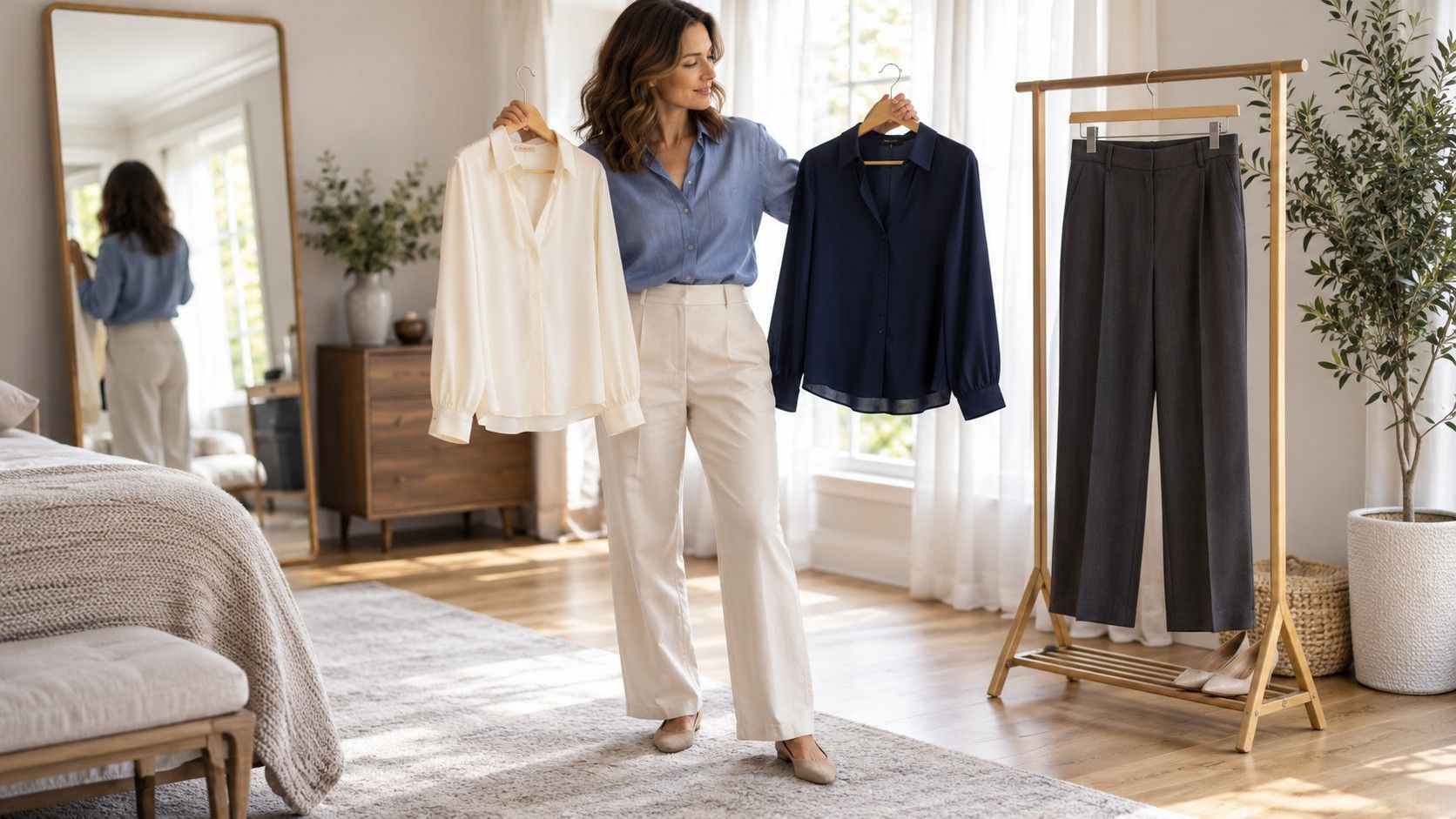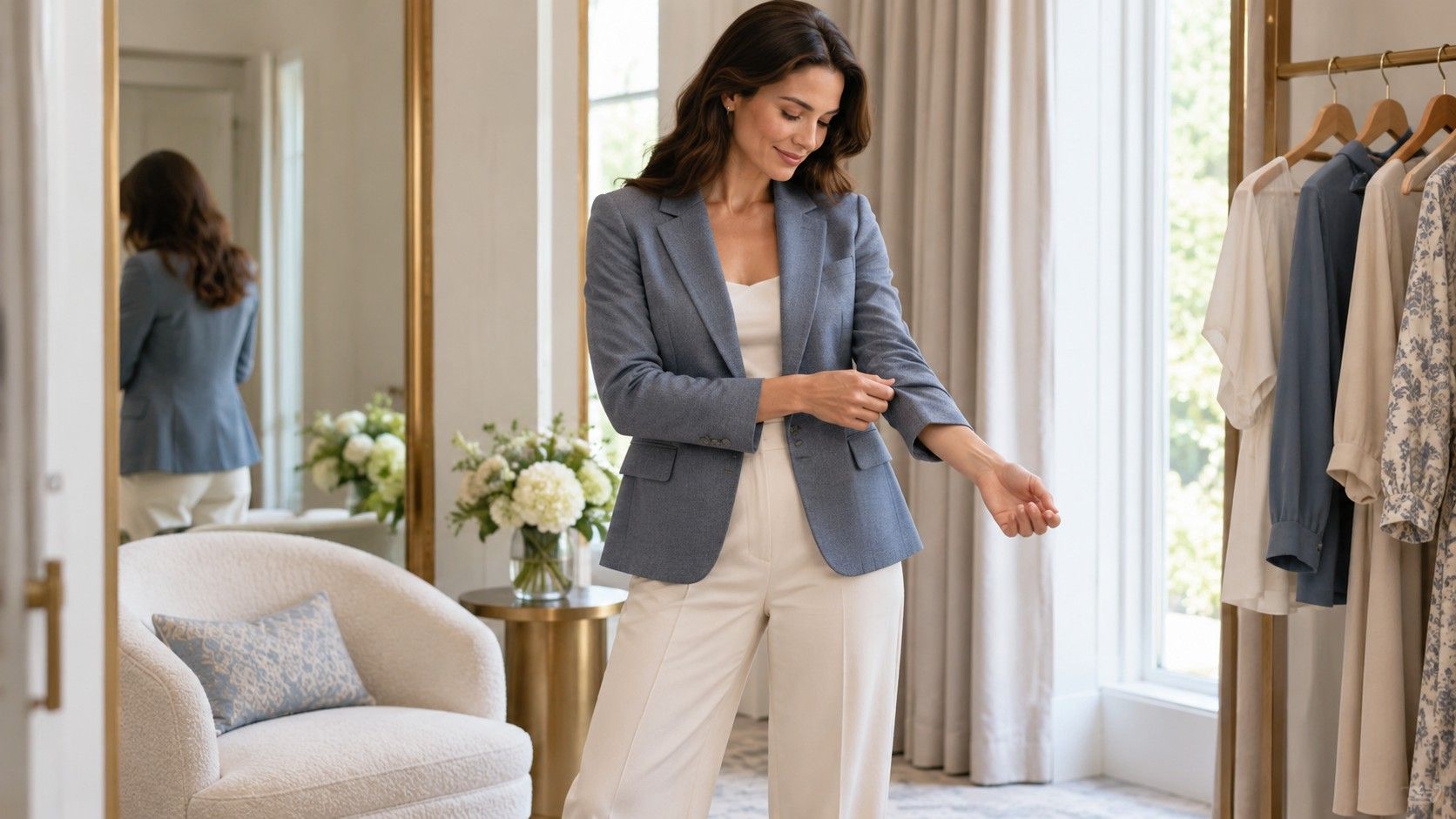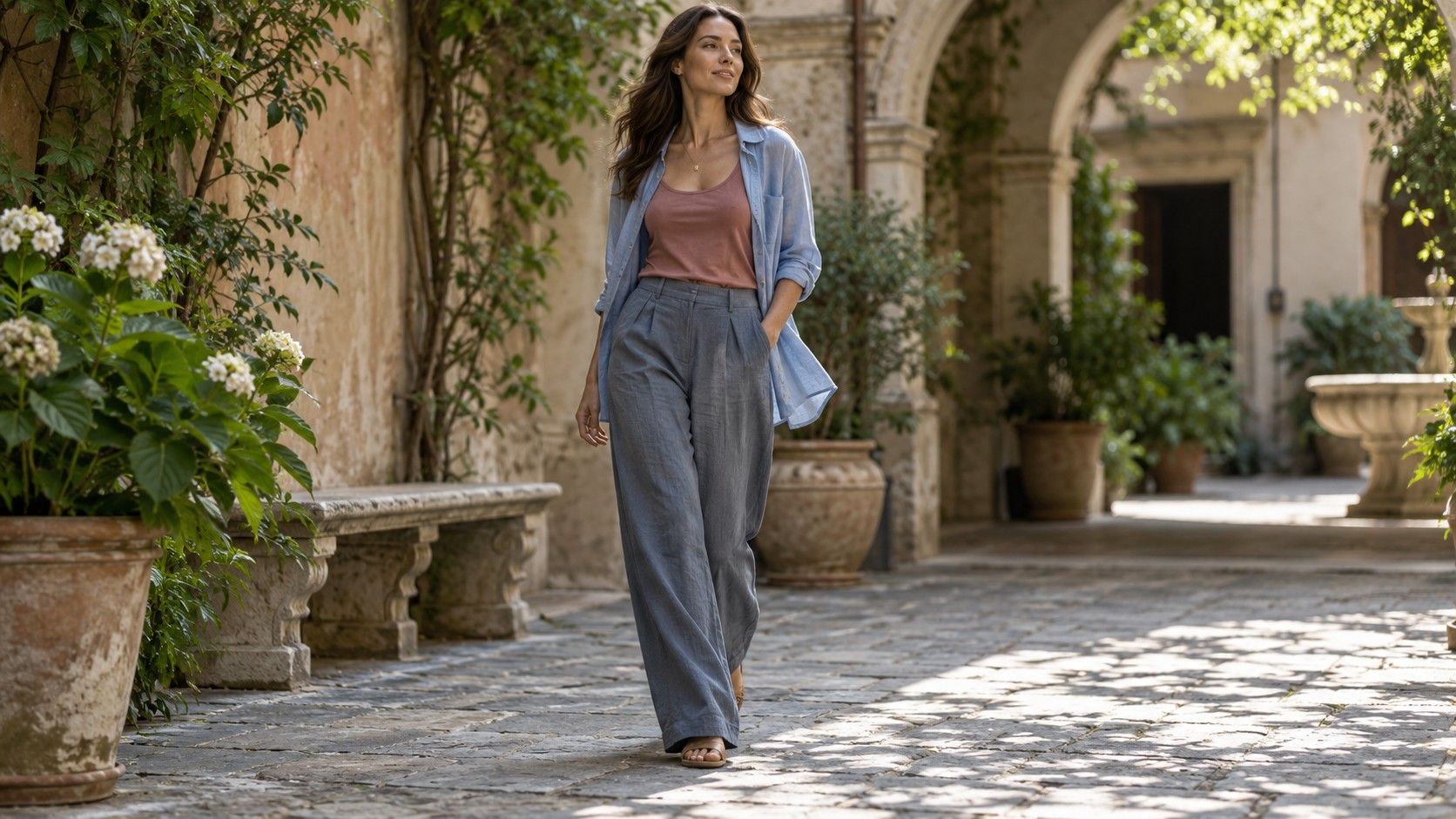
A useful layer should earn the space it takes up. It may need to handle a cool office, cover your arms in the sun or make a simple outfit feel finished before dinner. Combining Flamboyant Natural styling ideas with a Soft Summer palette can suggest relaxed shapes and muted colors, but neither label tells you whether a jacket will fit over your sleeves. Use these optional frameworks as ideas to compare, then judge the complete outfit by its comfort, movement and purpose.
Decide what the layer needs to do
Before choosing a silhouette, name the job. A linen shirt for a warm afternoon needs different qualities from a cardigan worn for hours beneath air conditioning. If the layer is mainly for warmth, check how it feels while sitting still; if it is for coverage, check the neckline and how the fabric behaves when you reach upward. An outfit can look beautifully light and still be wrong for the room.
People exploring flamboyant natural soft summer combinations may want the ease of a less confined outline with the gentler contrasts associated with muted color palettes. Translate that into garment choices you can inspect: room around the armhole, fabric that falls rather than stands out, and colors that are distinct without feeling abrupt. These are preferences to test, not rules for identifying a body type or proving a seasonal category.
Choose the base layer with the outer one in mind. A smooth tank can sit easily beneath a textured cardigan, while a roomy cotton T-shirt may need a larger sleeve opening. Two relaxed pieces do not always move well together. The underlayer can catch at the shoulder or gather inside the sleeve, creating bulk that has more to do with fabric friction than with the overall width of the clothes.
Compare open fronts and closed layers
An open front shows more of the base outfit and can create a continuous line down either side. Try an unbuttoned shirt over a tank and straight trousers, then fasten two or three buttons and compare. The open version may feel lighter; the partially closed version may stay in place better in wind. Neither arrangement is universally more flattering, and both need enough room for sitting and reaching.
A closed knit can be simpler when you want warmth without loose fronts. Pay attention to the hem and neckline: a firm lower band may make the knit sit higher when you move, while a loose edge can fall over the trousers. If the fabric keeps catching on the waistband, try a smoother base or a different length. Pulling the hem down repeatedly is a useful sign that the combination needs adjustment.
Compare outer layers in the same color family so shape is easier to judge. A soft blue overshirt, a blue-gray cardigan and a light denim jacket can produce quite different outlines. The shirt usually allows changes through buttons and sleeves; the cardigan may drape closer; the denim jacket may hold more volume at seams and pockets. Judge the actual fabric weight and construction rather than assuming every example behaves the same way.
Watch the front edges during ordinary movement. A long, light cardigan can fold inward and hide the top beneath it, while a broad shirt collar can shift under a shoulder bag. These are not faults if they do not bother you. If you want the fronts to remain visible, choose a little more fabric weight, a different neckline or a shorter length before trying to secure everything with accessories.
Keep muted colors distinct enough
A muted palette can have plenty of depth. Instead of combining three pale gray pieces, try a light blue-gray top, medium slate trousers and a deeper soft navy layer. The changes in value help you see each garment without relying on a bright accent. If you enjoy a lighter outfit, vary the texture and keep the darkest detail in a shoe, bag or belt.
Soft Summer is commonly used as a prompt to explore relatively cool, softened colors. Compare dusty rose, muted blue, subdued plum and gray-green in real fabrics rather than treating their names as precise specifications. A gray-green shirt can lean warm next to one top and cool next to another. Store lighting and camera settings can change the impression, so check the pieces together in daylight when possible.
Choose one item you already like near your face and build outward from it. A faded blue shirt might work over a soft white tank with charcoal trousers; a dusty rose cardigan might suit a gray tee and muted navy skirt. The base colors need not share the same depth. In fact, a small difference can prevent an open layer from disappearing into what sits beneath it.
If an outfit looks flat, change one relationship at a time. Replace the middle-tone tank with a lighter version, or deepen the trousers while leaving the shirt alone. Adding several new colors at once makes the result harder to understand. A full-length photograph can help compare combinations, though its white balance will not give an objective verdict on your coloring.
Work with hems and sleeves together
Bulk often collects at the points where garments meet. An overshirt ending at the same place as a thick T-shirt can create a firm horizontal band, especially above a high waistband. Try a shorter, smoother base beneath the shirt, or let the outer hem extend clearly below it. A deliberate difference is often easier to manage than two edges that keep catching each other.
Length works in relation to the rest of the outfit. A long open shirt over wide trousers may feel comfortably fluid, but a shorter shirt could make the same trousers easier to see and move around in. Compare both with the shoes you intend to wear. There is no useful universal hem measurement here: fabric weight, trouser rise, your proportions and the outline you enjoy all change the result.
Sleeves deserve their own space. A broad T-shirt sleeve can bunch inside a slim cardigan, even when the body of the cardigan fits well. Try the layers together and bend your elbows several times. If you need to hold the under-sleeve in place while putting the outer one on, consider a narrower base sleeve, a roomier outer sleeve or a sleeveless base if that suits the setting.
Rolling sleeves can lighten the appearance of a substantial shirt, but it also adds a band of fabric. Make one loose fold or two neat turns and see whether the cuff stays put without pressure. If the rolled section feels tight when you bend your arm, leave the sleeve down or choose a shorter sleeve. An exposed wrist is a styling option, not a requirement for balance.
Check the back hem with a bag on your shoulder. A crossbody strap can pull a light shirt toward one side, and a backpack can make a cardigan ride upward. A layer that sits well without a bag may need a different fabric or length for your commute. Test the setup you will actually use, including any coat that must fit over it later.
Test the complete outfit in motion
Do a short practical circuit before deciding. Sit in a chair, reach for something at shoulder height, bend to adjust a shoe and walk at your normal pace. Notice tightness, slipping necklines, sleeves caught under each other and fabric gathering at the waist. Fix the most persistent problem first; a more elegant color combination will not resolve an uncomfortable armhole.
Test warmth with the layers on for a few minutes rather than taking a single mirror photograph. A loose outline can still feel warm if both fabrics are dense, and a fine knit may offer less coverage than expected when stretched over the base. For sun exposure, do not assume an ordinary light shirt provides a stated level of protection; choose appropriately rated clothing if that is the function you need.
Inspect the outfit from the side as well as the front. Open fronts can look clean straight on while the back gathers above a waistband. Sometimes smoothing the base top is enough; sometimes the outer hem is catching on a pocket or belt. Adjust the contact point before deciding that the whole silhouette is wrong. Small construction details often explain the result.
Give the layer a final practical check: can you carry your bag, use the pockets and remove it without pulling the base out of place? If it needs frequent attention, try one simpler combination before buying a replacement. A smooth tank, comfortable trousers and an open shirt can reveal whether the problem was the layer itself or the number of pieces competing underneath it.
Keep the version you can wear through the planned day with the least fuss. You might prefer a roomy shirt, a closer cardigan or a short light jacket, and each can belong in the same wardrobe. The useful connection between Flamboyant Natural ideas and a Soft Summer palette is permission to explore ease and softened color together. Your clothes still have to answer to your movements, weather and taste.