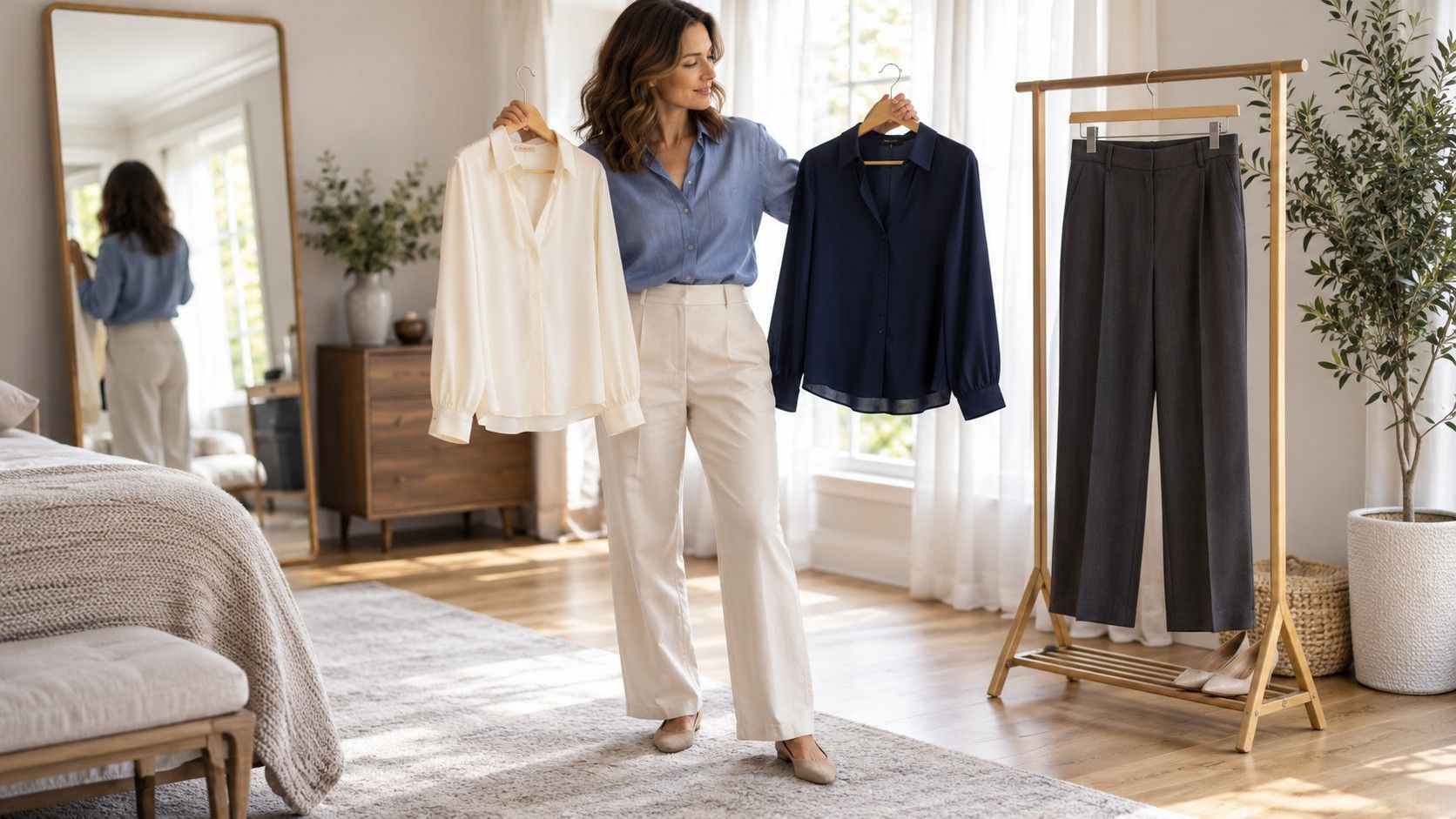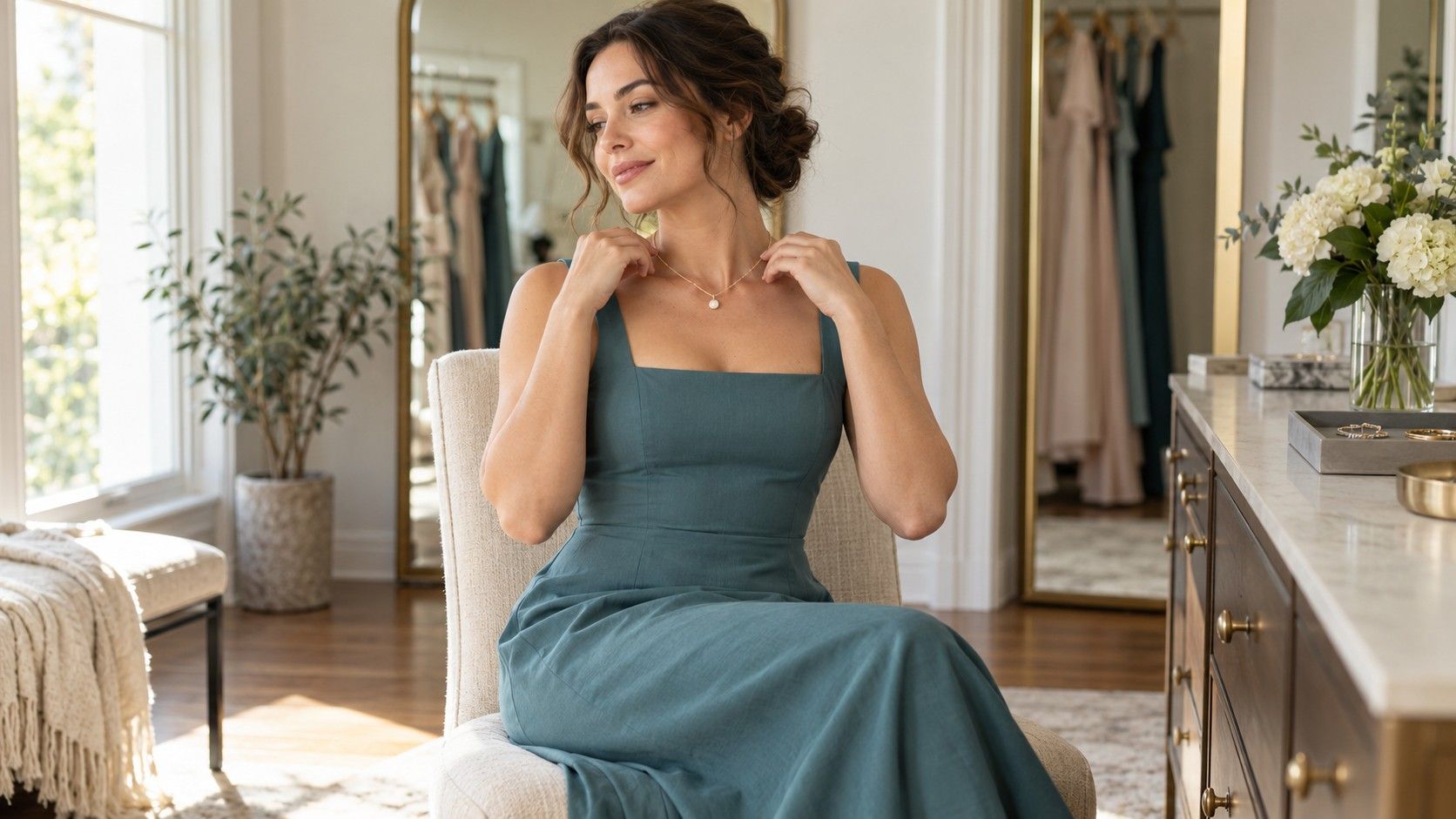
A neckline may look perfect on a hanger and become distracting the moment you sit down or reach for your bag. Its shape is only part of the story: straps, fabric, garment length and the layer underneath all influence how it stays in place. When comparing a dress neckline, body proportions can be one visual consideration, but they do not dictate what you may wear. Start with the dress, the occasion and the amount of attention you want to give it during the day.
Start with the dress you will actually wear
Name the occasion before choosing a neckline. A dress for a long working day may need to sit comfortably beneath a jacket and keep a consistent level of coverage when you lean forward. A summer evening dress might leave more skin exposed but still need straps that stay secure while you walk. There is no single best amount of openness; decide what feels appropriate and comfortable for your plans.
Compare the neckline together with the whole dress. A high neck in a light, loose fabric can feel very different from the same shape in a firm fitted bodice. A deep V with wide straps may stay more securely in place than a shallower opening with narrow straps. Look at how the garment is built rather than assigning a result to the outline alone.
Try two neckline shapes in similar fabrics if you want a useful comparison. A scoop and a square neck in comparable knits make it easier to see which edge you prefer near your face. Comparing a crisp cotton shirt dress with a fluid satin slip dress changes so many things that the neckline becomes difficult to judge separately. Both comparisons can be enjoyable, but they answer different questions.
Notice the shoulder and waist seams before deciding on the opening. A dress hanging too low from the shoulders can make an otherwise suitable neckline feel deeper than intended. A bodice that is too long may gather at the waist or shift when you sit. A different size or cut may solve more than an accessory placed across the neckline.
Use style labels as suggestions if you find them useful, without letting them veto a dress you enjoy. A preference for curved, angular, narrow or wide openings does not diagnose a body category. The meaningful result is a dress that fits your taste and works through the actual occasion, including the coat, bag and shoes you will wear with it.
Check coverage and movement together
Begin with a relaxed standing check, then move. Bend slightly forward, reach across your body and sit down. Watch whether the edge stays close enough for your chosen coverage or stands away from you. A neckline can look tidy while you hold a particular posture and behave differently during an ordinary conversation at a table.
With a wrap dress, check the overlap at the bodice and skirt separately. More room in the waist does not necessarily solve a neckline that opens when you move. Tie it at a comfortable tension and see whether the fronts lie smoothly. If you need a hidden fastening, ask whether it can be added without pulling the fabric or making the dress difficult to put on.
For square and wide necklines, check both shoulders when you carry a bag or lift an arm. The opening may shift if the straps sit near the shoulder edge or the bodice lacks enough stability. A narrow neckline can have its own issues, including an edge that feels restrictive when seated. Comfort is a better test than assuming one shape is automatically easier.
Look at the neckline finish. A facing that rolls outward, binding that twists or a stretched edge can change the appearance and require regular adjustment. These construction details matter even if the dress is otherwise the right size. Try another example of the garment if available, since a stretched display piece may behave differently from an unworn one.
Be realistic about repairs. Shortening straps may lift the neckline, but it can also move the armhole and waist position. Closing a wrap edge may affect how you get into the dress. Ask a tailor to assess the complete garment before buying something that depends on alterations. A pin can illustrate a possible change in the fitting room; it does not guarantee the finished result.
Use color to change the emphasis near the face
The same neckline can feel more or less noticeable depending on contrast. A dark edge against lighter skin may create a clear outline, while a lower-contrast shade may make the transition feel softer. Neither effect is inherently better. Compare the impression you enjoy alongside the practical fit, and avoid treating a color relationship as a rule about what your body needs.
If you use seasonal color ideas, try a few actual fabrics close to your face in steady daylight. A muted blue, softened rose or warm brown can look quite different across matte cotton, shiny satin and textured knit. Color names alone do not tell you how a dress will behave under office lights or at an evening venue. Keep the garment material in the comparison.
Notice where a print meets the opening. A pale border, contrasting collar or busy floral section may draw attention toward the neckline even when the rest of the dress is understated. If you like the dress but want a quieter effect, compare a solid version or a smaller-scale print. Do not assume that changing the neckline shape is the only available adjustment.
Check the dress with your outer layer on. A jacket collar can make a new shape around the neckline, and a cardigan may hide most of it. If the dress will remain under a jacket for a whole event, judge that complete arrangement as well as the dress alone. A color that seems dominant by itself may become a small accent once layered.
Compare jewelry without changing the whole dress
Try the dress without a necklace first so you can see its own edge clearly. Then add one piece and compare. A pendant may echo an open neckline, while a short necklace may sit above it and make a separate line. The result depends on length, pendant weight and where the dress edge falls; a general chart cannot settle every combination.
Watch the jewelry as you move. A pendant that rests neatly when standing may slip inside the neckline when you sit. A short necklace can catch on a textured finish or compete with a decorative collar. If you keep moving it back into place, try a different length or leave the neckline clear and use earrings instead.
Consider the dress details before adding more. Ruffles, a tie, embroidery or a prominent seam may already provide the emphasis you want. Small earrings and a simple bracelet can be enough for the occasion. If you prefer more jewelry, choose it deliberately rather than assuming every open neckline has an empty space that needs filling.
Compare the accessory color against the fabric, too. A bright metal surface may feel sharper beside a muted dress, while a brushed finish may create a softer effect. You can enjoy either contrast regardless of seasonal color labels. The practical questions are whether the piece sits comfortably, works with the garment and feels right for how formal you want to look.
Make the final check with the right underlayer
Wear the underlayer you intend to use before deciding that the neckline fits. Bra shape and strap position can affect both the fabric fall and what remains visible. If a new underlayer would be necessary, include its comfort, availability and cost in the decision. A dress is less useful if it depends on something you dislike wearing.
Inspect the front, back and side in ordinary light. Check straps near the armhole, seams beneath a close-fitting bodice and any lining edge that might show through. Light fabrics can change appearance when backlit, so a second check near a window can help you judge coverage. Keep your preferred level of visibility as the standard rather than assuming every strap or seam must be hidden.
A camisole can raise coverage beneath a low neckline, but compare its edge with the dress. A straight band may add a clear horizontal line inside a V; a softer curved edge gives a different effect. Make sure the extra layer does not bunch at the waist or pull as you sit. In warm conditions, consider whether the additional fabric is comfortable for the length of the event.
Try the full getting-dressed sequence once: fasten the dress, add jewelry, put on the jacket and pick up the bag. If an edge shifts, identify what moves it. A strap adjustment, smoother underlayer or different bag position might resolve the problem, while an unstable bodice may need another cut. Avoid relying on repeated rearrangement as the main fit solution.
Choose the dress that lets you give your attention to the day. You can prefer a high neck, an open scoop, a square edge or a wrap without defending the choice through a body label. Good fit shows up in ordinary moments: you sit comfortably, your chosen coverage stays manageable and the clothes feel like something you are pleased to wear.